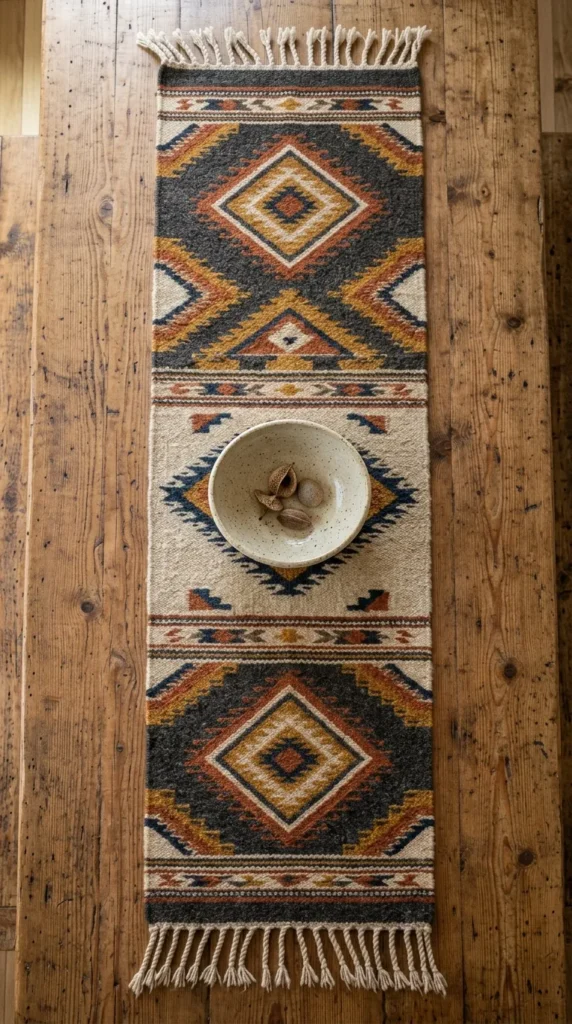
14. Southwestern Woven Wool Table Runner with Fringe
Introduction
A rustic dining table runner woven on a simple frame loom using coarse, thick-spun Churro wool yarn in authentic high-desert palettes: raw cream, charcoal grey, deep ochre, rust terracotta, and dusty sage.
What This Idea Means
Textile arts of the American Southwest reflect the climate and heritage of desert weavers. Crafting your own geometric runner adds tactile substance, insulating surfaces and bringing artisan depth to dining areas.
Needs & Materials
- Adjustable wooden frame loom or rigid heddle loom
- 100% heavy unbleached cotton warp thread
- 2-ply and 3-ply coarse rustic wool yarn (assorted desert earth tones)
- Wooden weaving shuttles and tapestry beater (or wide-tooth wooden fork)
- Tapestry needle
- Sharp scissors
How to Make It
- Warp the frame loom with strong cotton thread at 4 to 6 ends per inch, maintaining firm, uniform tension across the full width.
- Weave 1 inch of plain tabby weave at the start using basic neutral yarn to establish a firm base line.
- Introduce main colors using the tapestry shuttle, alternating rows using basic over-under weaving.
- Build geometric diamond or stepped patterns using the interlocking tapestry join technique (linking adjacent color blocks around the same warp thread).
- Pack down weft rows firmly with a wooden tapestry beater to create a durable, warp-faced weave where warp threads remain hidden.
- Once reaching the desired length (e.g., 48–72 inches), finish with a final inch of plain weave.
- Cut warp threads from the loom pins in pairs and tie them off with square knots to create an organic 4-inch raw fringe border along both ends.
Tips & Variations
- Tip: Never pull weft yarns tight horizontally through the shed; lay them in at a 45-degree angle before beating down to keep the edges straight.
- Variation: Sew small antique Mexican copper trade coins or brass beads into the braided fringe ends for gentle sound and weight.