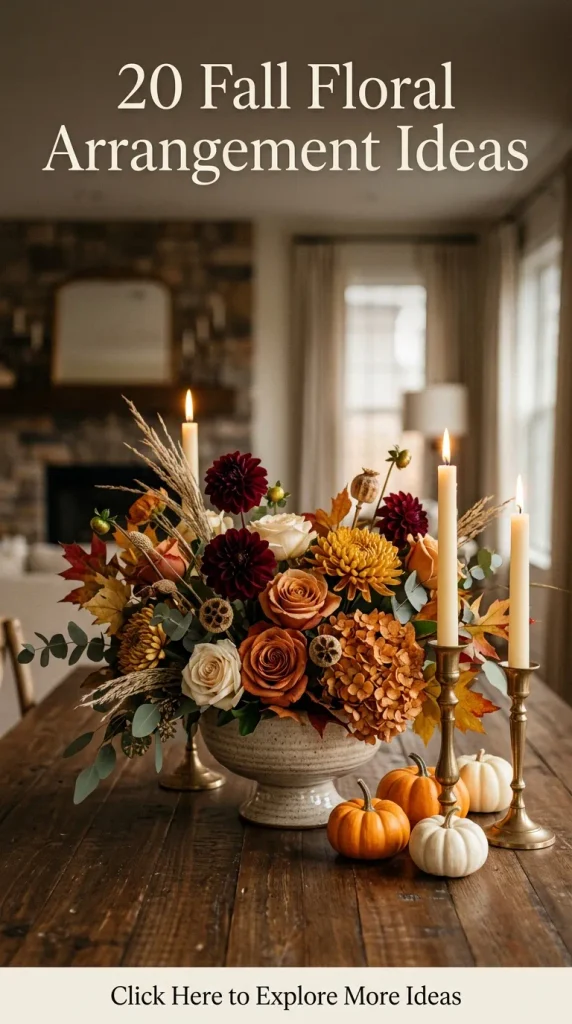
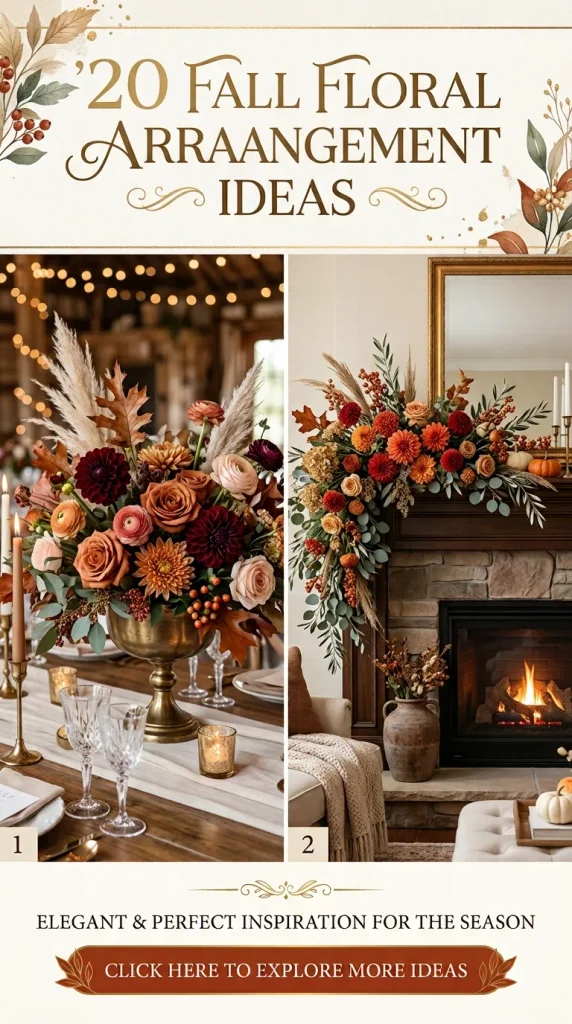
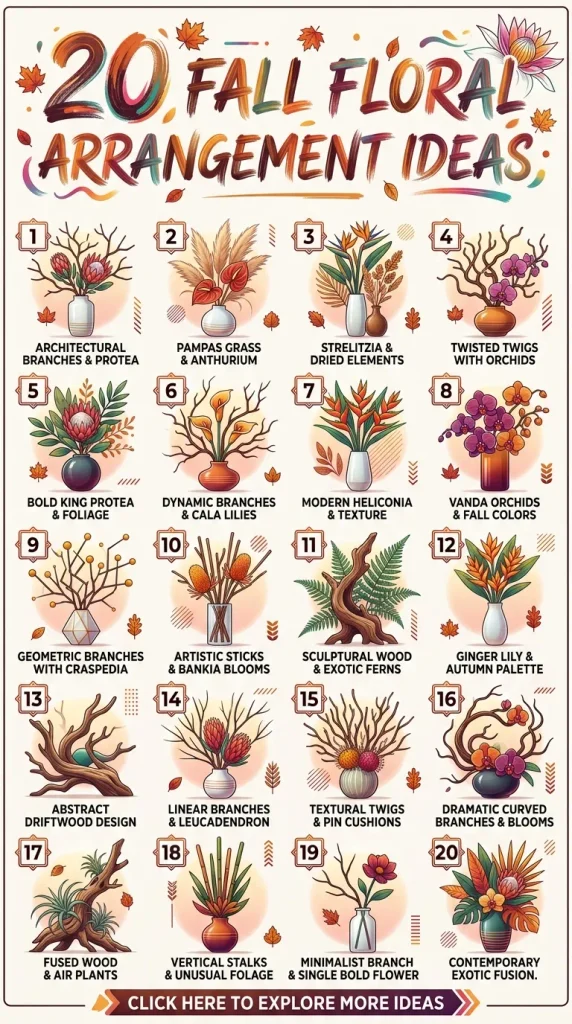
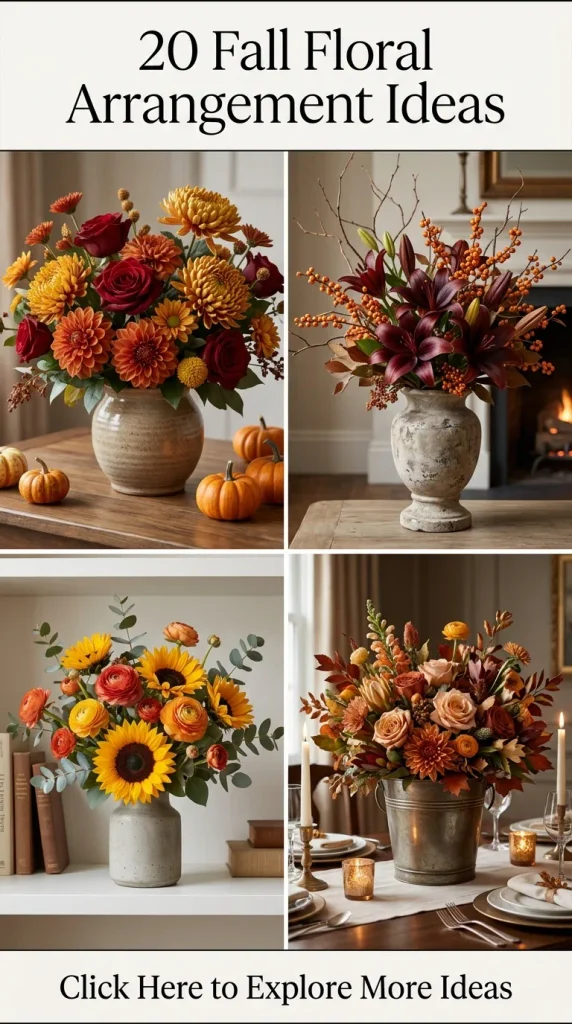
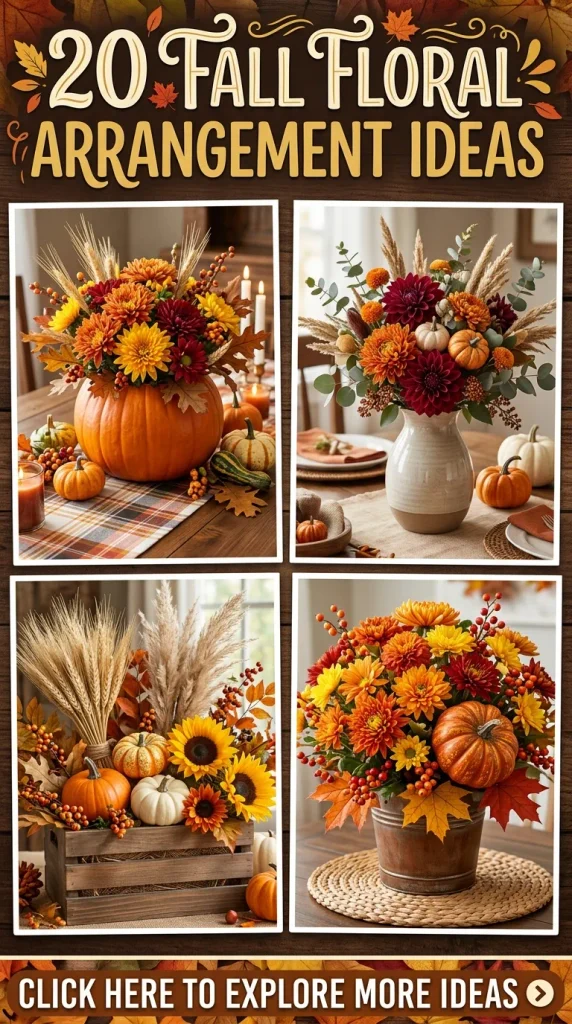
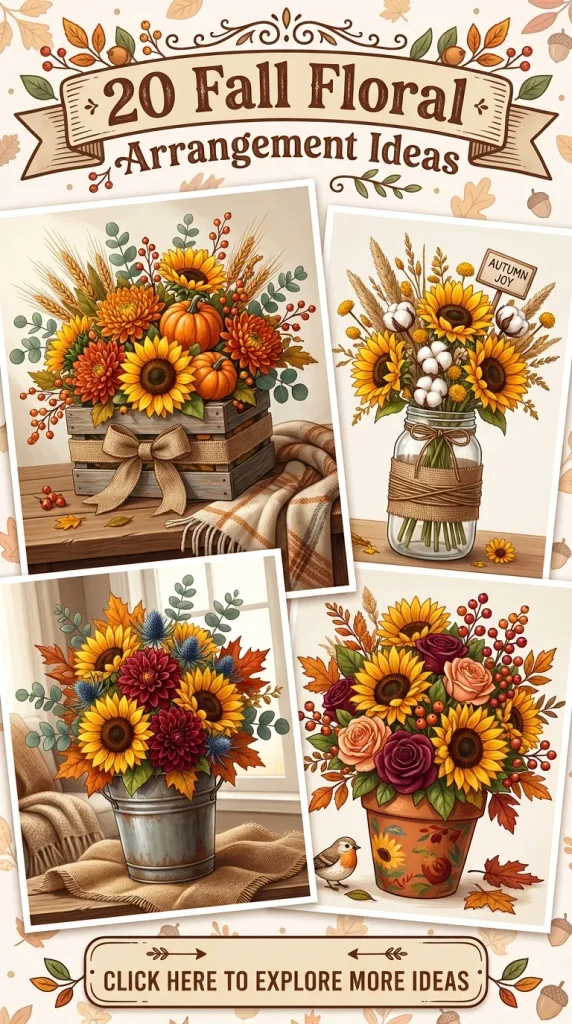
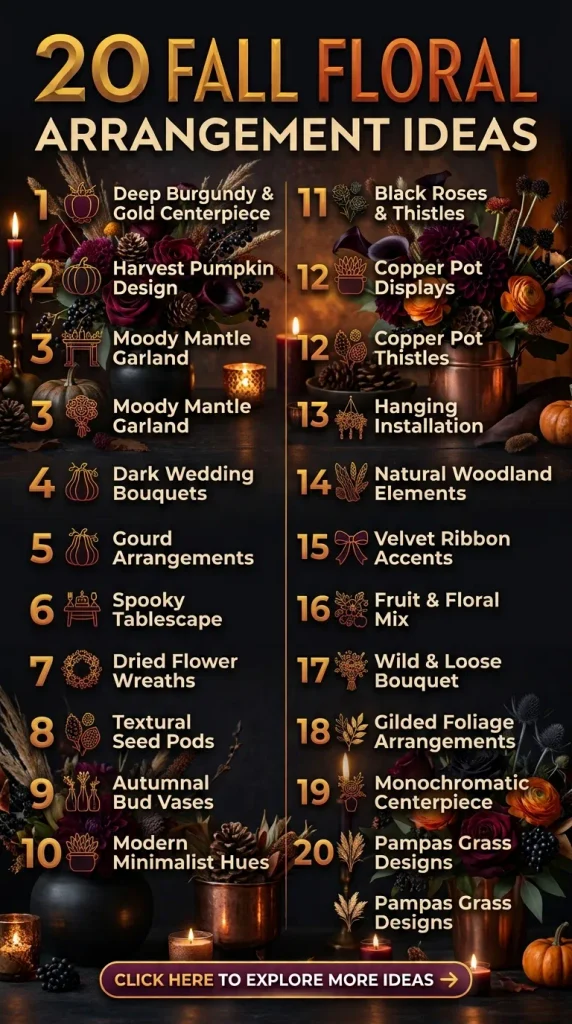
Autumn is a season of profound textural shifts and rich, grounding color palettes. As the crisp air settles in and nature sheds its vibrant summer cloak, interior styling pivots toward warmth, comfort, and tactile depth. Fall floral arrangements serve as the anchor of seasonal decor, bridging the gap between late-harvest abundance and the cozy intimacy of indoor spaces. Embracing autumn floristry means looking beyond traditional orange pumpkins and exploring a sophisticated spectrum of rust, terracotta, ochre, muted plum, and deep forest green. By incorporating dried elements, foraging local branches, and working with unexpected vessels, you can curate striking focal points that transform any room into an inviting autumnal sanctuary.
Mastering the art of autumn arrangements requires an appreciation for asymmetrical balance and botanical movement. Unlike the tightly packed, symmetrical bouquets of spring, fall designs celebrate wild, organic silhouettes that mimic nature’s effortless grace. From dramatic, tablescape-dominating centerpieces to minimalist bedside accents, these twenty unique concepts offer endless inspiration for elevating your seasonal aesthetic. Each idea is meticulously detailed with design concepts, step-by-step crafting instructions, creative variations, and essential care tips to ensure your botanical displays remain fresh, captivating, and deeply atmospheric throughout the season.
1. Velvet Terracotta Amber Centerpiece This arrangement marries the warmth of amber glassware with the rich, tactile luxury of terracotta-toned blooms and velvety textures. It is designed to act as a commanding focal point for a dining room table or a grand entryway console, radiating an immediate sense of autumnal warmth and sophisticated comfort.
- Materials Needed: Wide-mouthed amber glass vase, floral grid or chicken wire, rust-colored garden roses, terracotta ranunculus, bronze chrysanthemums, dried panicum grass, and seeded eucalyptus.
- Step-by-Step Instructions:
- Secure a piece of chicken wire or create a waterproof tape grid across the opening of the amber vase to anchor the stems securely.
- Establish the outer silhouette and height of the arrangement by inserting the seeded eucalyptus branches at varying angles, allowing them to drape gracefully over the rim.
- Introduce the focal flowers—the rust-colored garden roses and terracotta ranunculus—placing them at different heights to create depth and visual weight near the center.
- Fill in the gaps using the bronze chrysanthemums, letting their rich clusters add dense color pockets throughout the design.
- Finish by feathering the lightweight panicum grass through the top and sides, introducing a wispy, windswept movement that captures the organic essence of fall.
- Tips and Variations: Swap the amber glass for a weathered terracotta pot for an entirely earthy, matte finish. Mist the fresh roses daily with a fine water spray to prolong their bloom cycle in dry indoor heating.
- Care Instructions: Change the vase water every two days, trimming half an inch off each stem at a 45-degree angle to maximize water absorption and prevent bacterial growth.

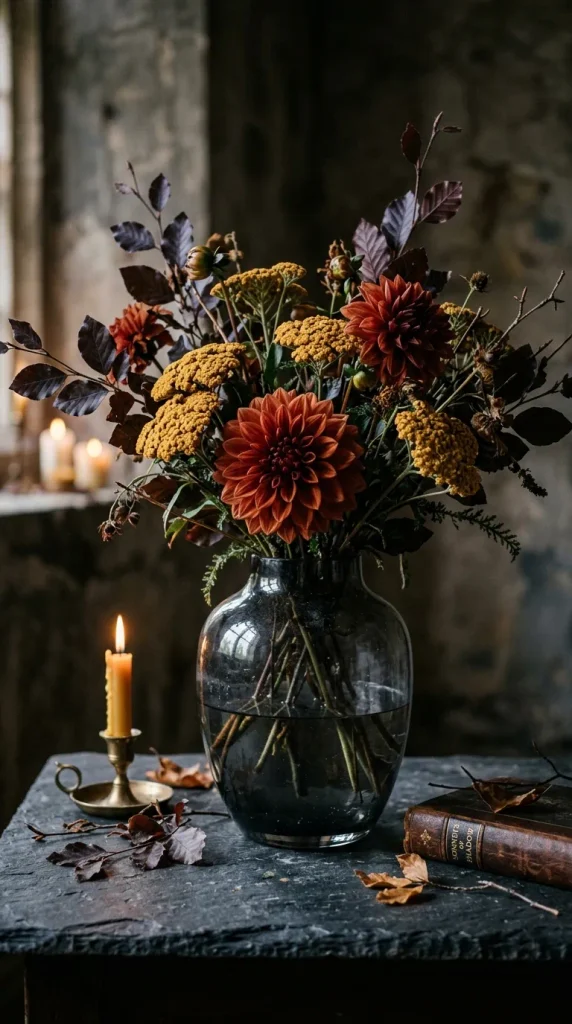
2. Smoked Glass Rust and Ochre Symphony Utilizing moody, semi-translucent smoked glassware, this arrangement plays with light and shadow. The moody container grounds the vibrant, fiery hues of ochre and rust, creating a striking moody aesthetic that feels simultaneously modern and timeless.
- Materials Needed: Tall smoked grey glass vase, rust-colored dahlias, ochre yarrow, dark brown scabiosa, copper beech branches, and dried bunny tails.
- Step-by-Step Instructions:
- Clean the smoked glass vase thoroughly and fill it three-quarters full with cool water mixed with floral preservative.
- Create a structural base by crossing the copper beech branches inside the neck of the vase to support heavier stems.
- Insert the large-headed rust dahlias slightly off-center to create a dynamic, asymmetrical focal point that draws the eye naturally.
- Weave the ochre yarrow clusters between the dahlias, allowing their flat-topped golden heads to provide a striking textural and color contrast.
- Add dark brown scabiosa for dramatic depth, and tuck the soft bunny tails sporadically throughout the arrangement for a playful, tactile finish.
- Tips and Variations: For a softer look, substitute copper beech branches with smoked eucalyptus. Ensure the water level remains high, as dahlias are notoriously thirsty stems.
- Care Instructions: Keep this arrangement away from direct sunlight and drafts, which can cause the delicate dahlia petals to drop prematurely.
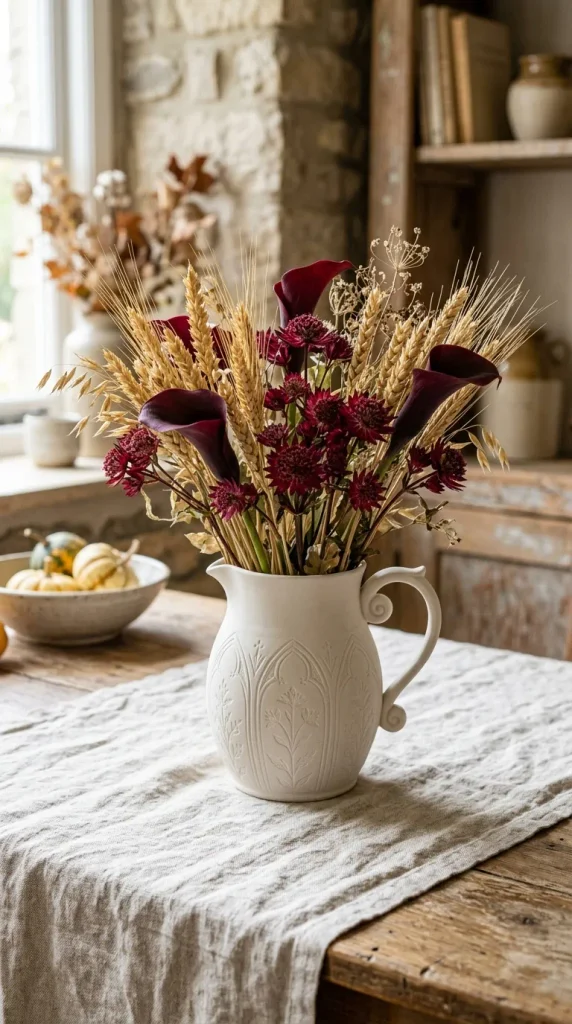
3. Rustic Wheat and Burgundy Minimalism Celebrating the minimalist movement within seasonal decor, this arrangement leans heavily on architectural simplicity. Deep burgundy tones contrast sharply against the sun-bleached neutrality of dried wheat, creating a sleek, contemporary statement piece.
- Materials Needed: Matte white ceramic jug, dried golden wheat stalks, burgundy calla lilies, dark red astrantia, and minimalist Smokey bush stems.
- Step-by-Step Instructions:
- Gather a thick bundle of dried golden wheat and tie the stems together with natural twine, trimming the bottoms so they stand uniformly at the desired height.
- Place the wheat bundle tightly inside the matte white ceramic jug to form a dense, textured structural backdrop.
- Insert the burgundy calla lilies individually among the wheat stalks, letting their sleek, sculptural stems and deep velvet blooms emerge organically.
- Accentuate the arrangement by tucking dark red astrantia flowers near the base of the lilies to soften the transition between wheat and bloom.
- Add a few wispy Smokey bush branches to introduce subtle smoky undertones and soften the overall perimeter of the display.
- Tips and Variations: Use black ceramic vessels instead of white for a high-contrast, moody transitional display. This arrangement requires zero water maintenance if using completely dried wheat.
- Care Instructions: Dust the dried elements gently with a feather duster or a cool hairdryer setting every week to maintain their crisp, clean appearance.
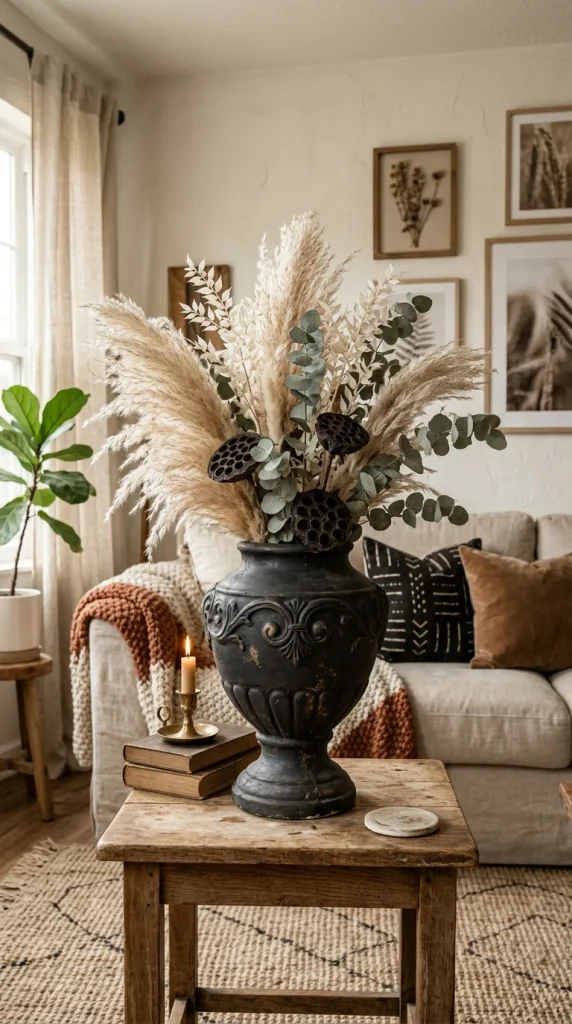
4. Golden Pampas and Dried Botanical Cloud A textural masterpiece that requires zero ongoing maintenance, this cloud-like installation focuses entirely on dried grasses, seed pods, and bleached botanical elements. It brings a soft, ethereal, and dreamy aesthetic to living room mantels or neutral-toned entryways.
- Materials Needed: Heavy earthenware urn, floral foam block (dry), pampas grass plumes, bleached ruscus, preserved natural silver dollar eucalyptus, dried lotus pods, and honesty seed lunaria.
- Step-by-Step Instructions:
- Wedge a dry floral foam block tightly inside the earthenware urn, ensuring it sits flush with or slightly below the rim.
- Insert the tallest pampas grass plumes toward the back and center to establish the overall height and expansive width of the arrangement.
- Layer the bleached ruscus branches cascading outward from the sides to create a soft, voluminous halo effect.
- Push the preserved silver dollar eucalyptus stems into the mid-layers to add rounded, organic leaf shapes that break up the linear grasses.
- Anchor the focal points by inserting dried lotus pods and delicate translucent lunaria discs near the base to add intriguing geometric shapes.
- Tips and Variations: Spray the finished pampas grass lightly with aerosol hairspray to minimize shedding and keep the delicate fibers locked in place.
- Care Instructions: Keep completely away from moisture and high-humidity areas like kitchens or bathrooms to preserve the integrity of the dried botanical fibers.

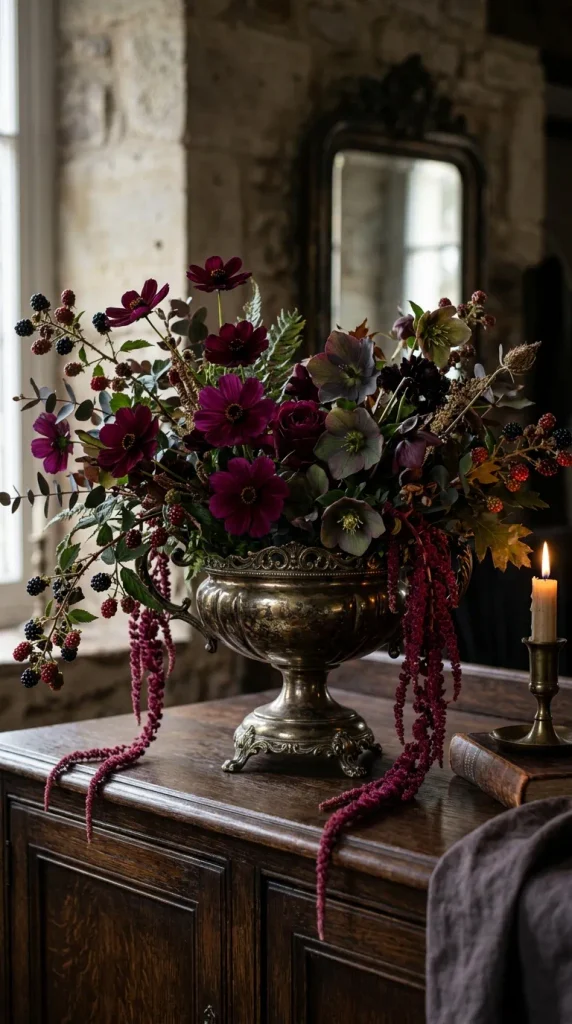
5. Moody Plum and Blackberry Heritage Display Drawing inspiration from Dutch master still-life paintings, this moody arrangement features opulent jewel tones. Deep plum blooms mingle with rich blackberry vines and dark foliage to evoke an atmosphere of dramatic, gothic-leaning autumn romance.
- Materials Needed: Footed antique brass compote bowl, chicken wire ball, plum-colored cosmos, dark purple hellebores, fruiting blackberry branches, trailing amaranthus, and purple smoke bush foliage.
- Step-by-Step Instructions:
- Secure a crumpled ball of chicken wire firmly inside the antique brass compote bowl using waterproof floral tape.
- Insert the trailing amaranthus on one side of the compote, allowing the long, rope-like burgundy blooms to spill dramatically over the edge of the table.
- Frame the arrangement with purple smoke bush foliage and winding blackberry branches laden with dark, unripened berries.
- Place the plum cosmos and dark purple hellebores centrally, ensuring their expressive faces are tilted outward to catch ambient room light.
- Fill any remaining interior gaps with smaller foliage sprigs to create a dense, opulent base that mimics a natural forest floor.
- Tips and Variations: Integrate fresh figs cut in half and impaled on floral picks to add an unexpected, painterly element to the base of the design.
- Care Instructions: Check the hidden water reservoir inside the compote bowl daily, as dense arrangements with woody stems consume water rapidly.
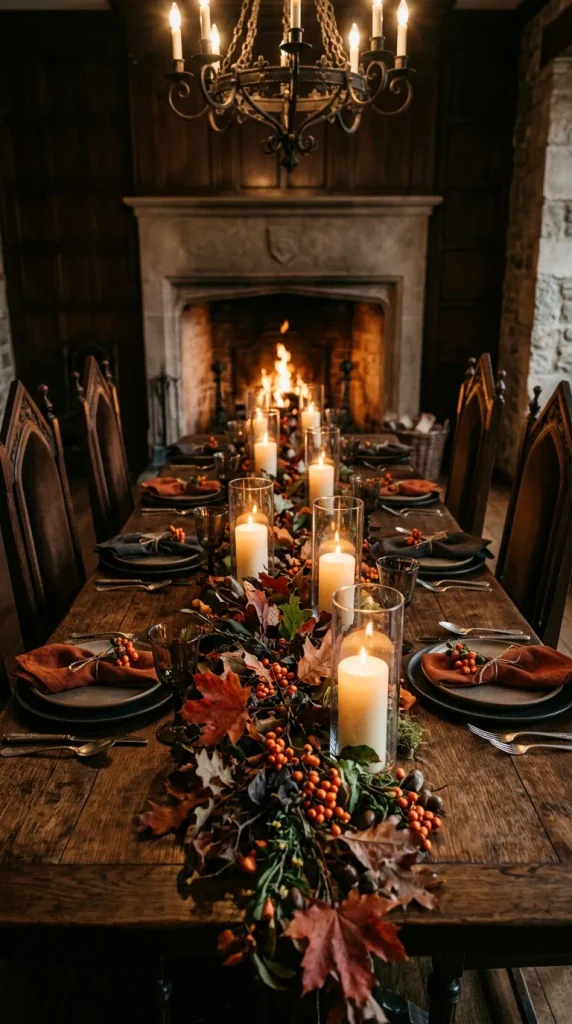
6. Foraged Oak Leaf and Bittersweet Garland Moving beyond traditional vases, this arrangement explores a linear, flowing table runner style. Using freshly foraged autumn leaves and bright orange bittersweet berries, it creates an immersive, woodland-inspired tablescape for autumnal gatherings.
- Materials Needed: Floral wire, floral tape, freshly foraged red and gold oak branches, bittersweet berry vines, and small pillar candles in glass cylinders.
- Step-by-Step Instructions:
- Create a flexible spine for the garland by twisting heavy-duty floral wire into a long, continuous foundational vine.
- Attach overlapping foraged oak branches to the wire base using floral tape, working in one consistent direction to create a layered, natural look.
- Weave the vibrant bittersweet berry vines through the oak foliage, letting the bright orange berries pop vividly against the drying leaves.
- Lay the completed botanical garland directly down the center of your dining table, weaving it naturally between settings.
- Place glass-enclosed pillar candles at regular intervals along the length of the garland to cast a warm, flickering glow through the leaves.
- Tips and Variations: Submerge foraged oak leaves in a mixture of one part glycerin to two parts warm water for a few days prior to crafting to keep them soft and vibrant for weeks.
- Care Instructions: Mist the fresh foliage lightly every evening with water, and remove any leaves that begin to curl or dry out prematurely.
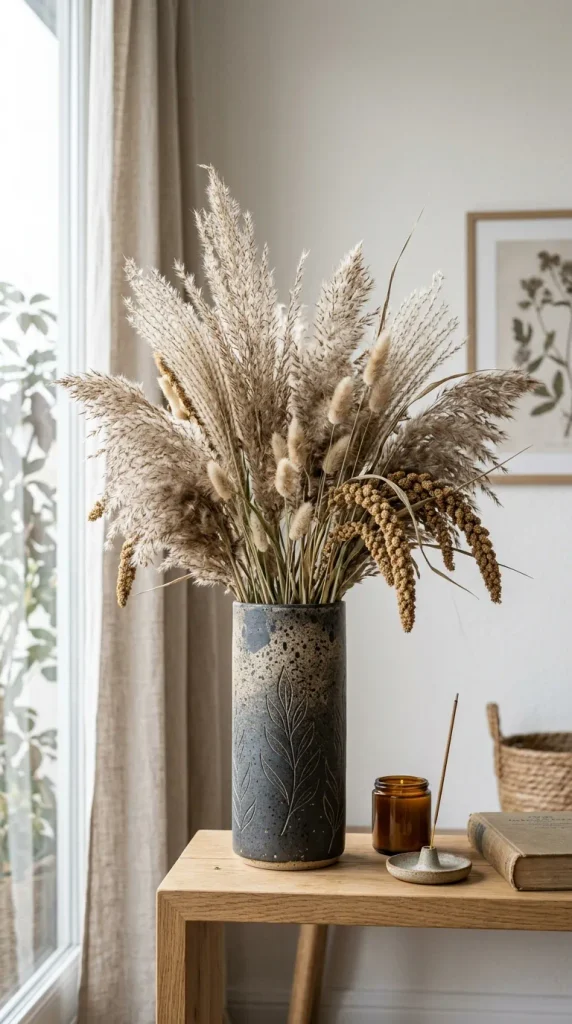
7. Ethereal Dried Grass and Feather Reed Arrangement An exercise in texture and lightweight architectural elegance, this arrangement highlights the delicate beauty of agricultural harvests. It features feathery reed grasses and natural seed heads housed in a minimalist speckled ceramic vessel.
- Materials Needed: Speckled ceramic cylinder vase, dried reed grass, feathered calamagrostis, natural millet stems, and dried poppy seed pods.
- Step-by-Step Instructions:
- Fill the bottom of the cylinder vase with small clean stones or glass marbles to provide physical weight and anchor lightweight stems.
- Group the tallest reed grasses together and insert them straight into the center of the vase to establish an airy, vertical pillar.
- Surround the central reeds with feathery calamagrostis, letting the softer stems flare outward to create a hazy, cloud-like perimeter.
- Add natural millet stems to introduce subtle downward curves and golden textures that contrast against the upright grass stems.
- Scatter dried poppy seed pods throughout the lower third of the arrangement to provide architectural contrast and earthy charm.
- Tips and Variations: Add a few drops of essential cedarwood or amber oil directly onto the stones at the base of the vase for a subtle, natural autumn fragrance.
- Care Instructions: Keep out of direct, intense sunlight to prevent the natural golden hues of the grasses from bleaching over time.
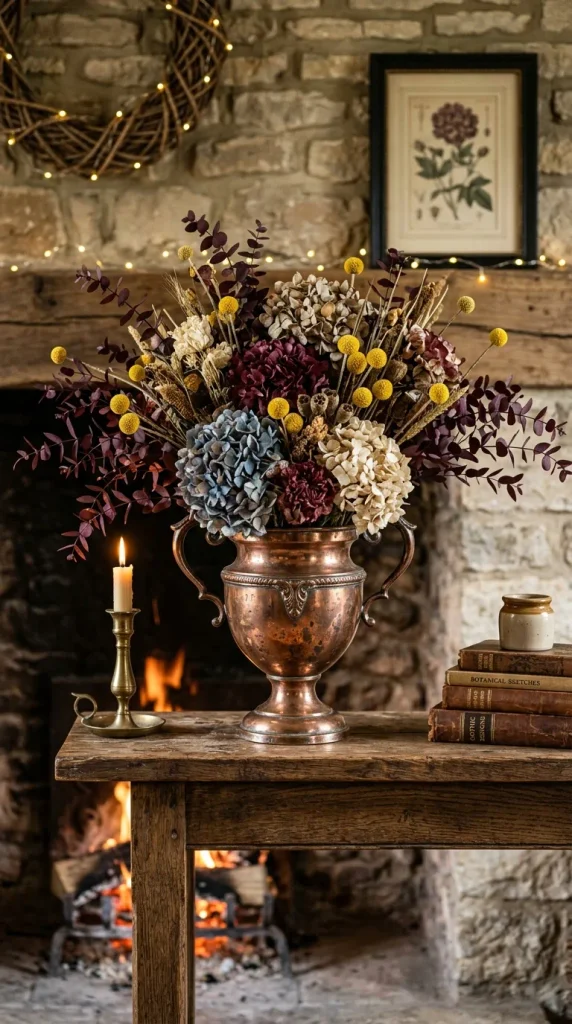
8. Velvet Hydrangea and Antique Copper Urn Dried or preserved autumn hydrangeas transition into papery, antique shades of sage, dusty rose, and muted bronze. Paired with an aged copper urn, this design celebrates vintage charm and classic botanical beauty.
- Materials Needed: Vintage-patina copper urn, dry floral foam, antique-stage dried hydrangea heads, burgundy feather eucalyptus, and stems of dried craspedia (billy balls).
- Step-by-Step Instructions:
- Cut a block of dry floral foam to fit snugly inside the belly of the antique copper urn, securing it with floral adhesive if necessary.
- Insert three large dried hydrangea heads to form a tight, rounded dome shape that completely covers the rim of the urn.
- Tuck burgundy feather eucalyptus stems between the hydrangea blossoms to add contrasting fine-line textures and deeper color notes.
- Punctuate the soft, voluminous hydrangea clusters with bright yellow craspedia balls, letting their geometric spheres pop playfully.
- Ensure the entire silhouette appears balanced and full from all 360-degree viewing angles.
- Tips and Variations: If fresh hydrangeas are used, dip their woody stems in alum powder before arranging to prevent premature wilting and wilting drooping.
- Care Instructions: Handle dried hydrangeas with extreme care, as their papery petals become fragile; keep them away from high-traffic zones where they might be brushed against.
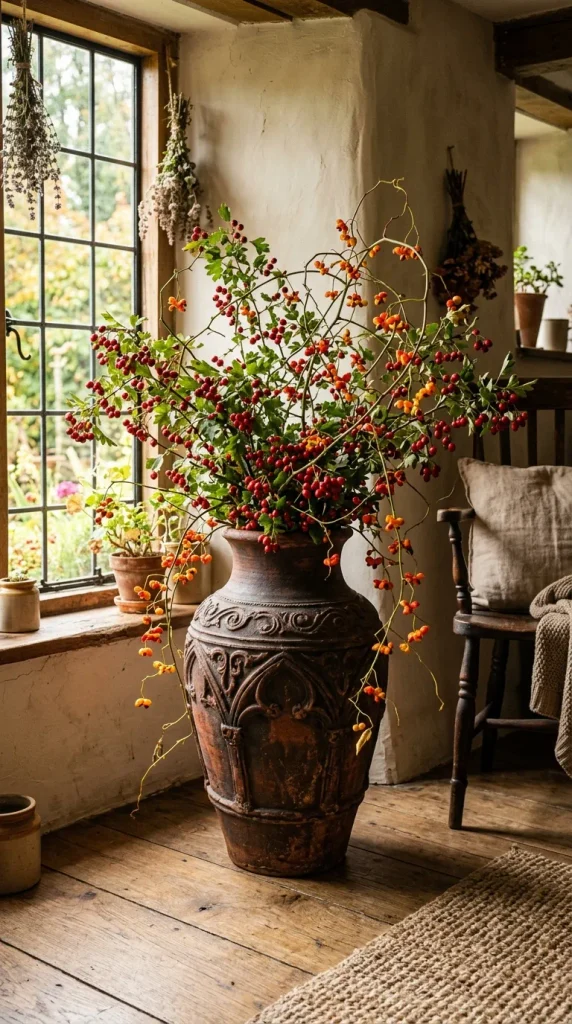
9. Wild Foraged Hawthorne and Bittersweet Branch Display Embracing the raw, untamed beauty of the countryside, this minimalist branch arrangement makes a bold statement with minimal effort. Large, sculptural branches laden with berries bring the wild energy of the changing season directly indoors.
- Materials Needed: Heavy terracotta floor vase, large foraged hawthorne branches with red berries, and winding bittersweet vines.
- Step-by-Step Instructions:
- Place the heavy terracotta floor vase securely in a corner or beside a fireplace where it has ample clearance.
- Select your largest, most architecturally interesting hawthorne branch and place it vertically inside the vase to anchor the composition.
- Layer secondary branches at varying heights and outward angles, ensuring the natural branching pattern looks balanced and organic rather than stiff.
- Wrap the winding bittersweet vines loosely around the base of the main branches and allow a few tendrils to spill over the lip of the vase.
- Step back to evaluate the silhouette from across the room, adjusting individual branches to create pleasing negative space.
- Tips and Variations: Spray paint the interior branches in a matte black finish before adding natural berries for an avant-garde, modern rustic interpretation.
- Care Instructions: Crush the very bottom woody ends of the branches with a hammer to help them drink water more efficiently and retain their berries longer.
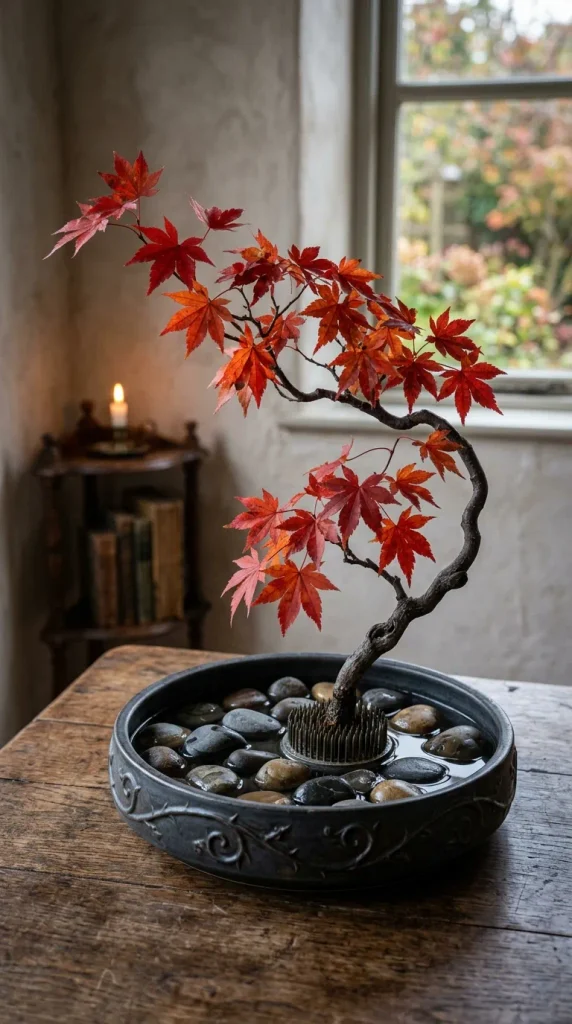
10. Minimalist Ikebana-Inspired Autumn Branch Rooted in Japanese floral design principles, this ultra-minimalist arrangement focuses on asymmetry, line, and negative space. A single striking persimmon branch or maple twig becomes an artistic sculpture in a low ceramic dish.
- Materials Needed: Low ceramic Kenzan (pin frog) dish, heavy brass needle pin frog, a single sculptural autumn branch with vibrant red maple leaves, and smooth river stones.
- Step-by-Step Instructions:
- Press the heavy brass needle pin frog firmly onto the bottom of the low ceramic dish, securing it with sticky clay if needed.
- Carefully select your primary maple branch, trimming away any cluttered or crossing leaves that obscure the primary line of the stem.
- Impale the main stem securely onto the needles of the pin frog at a dramatic, sweeping angle, leaning it gracefully across the dish.
- Arrange smooth river stones around the base of the pin frog to conceal the metal mechanics and add a grounding natural element.
- Add a shallow pool of clean water to the dish, keeping the water level visible to enhance the serene, contemplative aesthetic.
- Tips and Variations: Use a branch with small green and orange unripe mini-pumpkins or ornamental peppers for an unexpected twist on traditional foliage.
- Care Instructions: Top off the water daily in the shallow dish, as evaporation happens quickly in heated indoor environments.
11. Cream Pumpkin and Neutral Foraged Grasses A sophisticated departure from bright orange jack-o’-lanterns, this arrangement nests soft cream-colored miniature pumpkins among neutral-toned dried grasses and cream garden roses for an understated, elegant harvest display.
- Materials Needed: Shallow wooden dough bowl, floral foam, preserved cream garden roses, natural pampas plumes, dried bleached wheat, and 3 miniature white heirloom pumpkins.
- Step-by-Step Instructions:
- Line the interior of the wooden dough bowl with plastic wrap to protect the wood, then secure a strip of floral foam down the center.
- Insert the preserved cream garden roses into the foam, clustering them slightly off-center to create a natural focal grouping.
- Frame the roses by pushing pampas plumes and bleached wheat stalks outward toward the ends of the dough bowl.
- Nestle the three miniature white heirloom pumpkins directly into the botanical base, resting them gently among the foliage and roses.
- Tuck small bits of preserved moss around the pumpkin bases to anchor them visually to the arrangement.
- Tips and Variations: Use velvet-flocked white pumpkins for an even softer, tactile variation that feels luxurious to the touch.
- Care Instructions: Wipe the heirloom pumpkins clean with a dry cloth periodically to prevent dust accumulation on their matte skins.
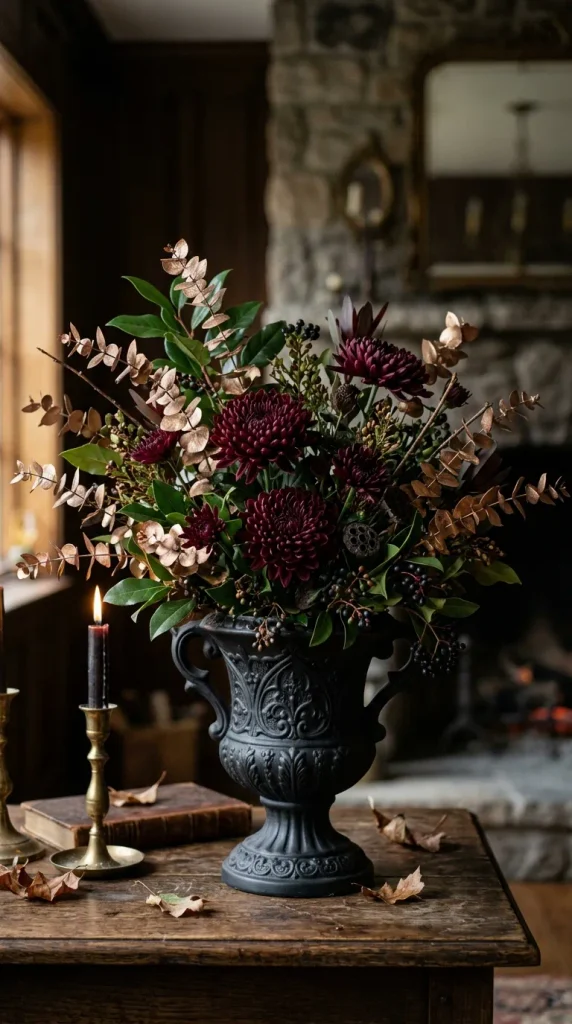
12. Deep Emerald and Bronze Foliage Arrangement Exploring the darker, moodier side of autumn, this design utilizes deep emerald-toned foliage paired with metallic bronze accents. It brings a regal, forest-floor ambiance to formal dining rooms and study spaces.
- Materials Needed: Heavy matte black ceramic urn, dark green salal leaves, bronze-sprayed eucalyptus, copper wire, and deep maroon chrysanthemums.
- Step-by-Step Instructions:
- Fill the matte black urn with a dense grid of chicken wire to hold heavy foliage stems firmly in place.
- Create a rich, dark perimeter by inserting dense salal leaves outward to establish the lush green framework.
- Weave the bronze-sprayed eucalyptus through the green salal, allowing the metallic leaves to catch ambient lighting and create contrast.
- Insert the deep maroon chrysanthemums in tight clusters throughout the center to provide rich, velvety focal points.
- Check the silhouette to ensure the dark greens and bronze tones are evenly distributed for a balanced, sophisticated finish.
- Tips and Variations: Incorporate dark purple ornamental cabbage leaves at the base for an unexpected, ruffle-textured organic element.
- Care Instructions: Keep away from heat sources like radiators, which will cause the dense foliage to dry out and drop leaves prematurely.
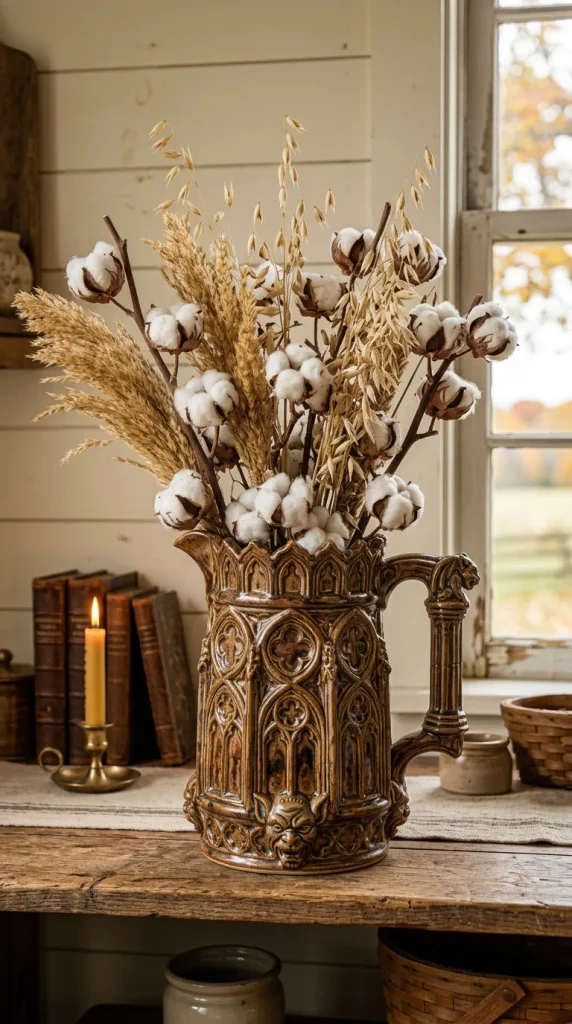
13. Dried Cotton Stem and Rustic Burlap Pitcher Bringing a cozy, farmhouse-inspired charm to interior spaces, this arrangement features crisp white cotton bolls paired with rustic dried grains housed in an earthenware pitcher wrapped in natural textures.
- Materials Needed: Ceramic pitcher with an earth-toned glaze, dried cotton bolls on natural woody stems, dried oat stalks, and natural brown broom corn.
- Step-by-Step Instructions:
- Clean the ceramic pitcher and ensure it is completely dry since this arrangement uses entirely dried botanical elements.
- Place the broom corn stems at the back of the pitcher to create a tall, textured fan-like background structure.
- Insert the dried oat stalks in the middle layer, letting their delicate nodding seed heads soften the perimeter of the broom corn.
- Position the cotton stem bolls front and center, angling their fluffy white pods outward to create eye-catching focal points.
- Adjust the heights so each botanical layer remains visible and contributes to a balanced, rustic composition.
- Tips and Variations: Tie a thick strip of frayed linen or burlap ribbon around the neck of the pitcher for added homespun character.
- Care Instructions: Store in a dry, low-moisture room; cotton bolls can attract dust, which can be easily removed using a hairdryer on a cool, gentle setting.
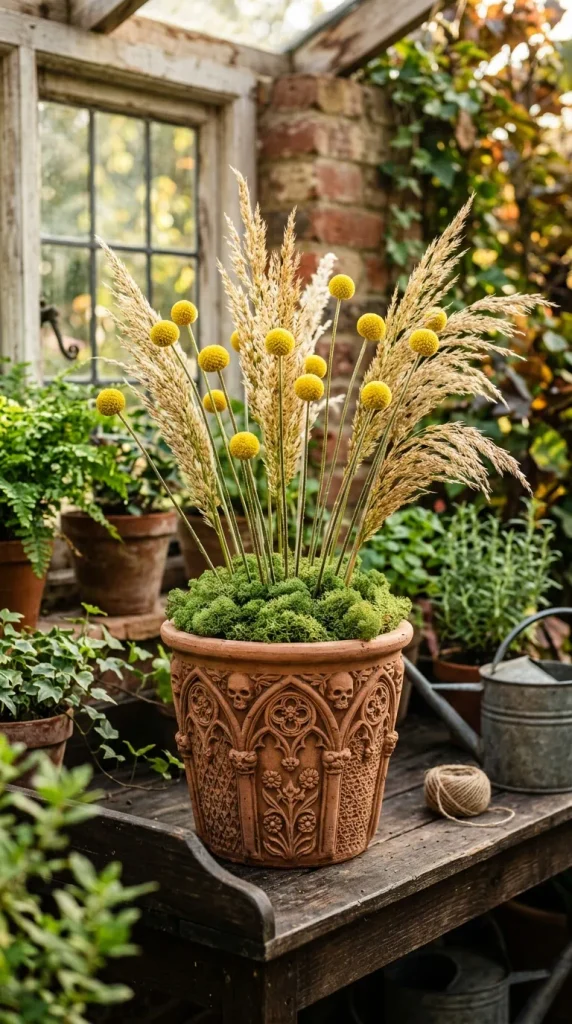
14. Terracotta Pot with Dried Billy Balls and Feather Grass Simplicity meets striking color contrast in this earthy display. Bright yellow craspedia (billy balls) pop vibrantly against neutral-toned feather grass, all anchored in a handcrafted terracotta vessel.
- Materials Needed: Unglazed terracotta flower pot, dry floral foam block, bright yellow dried craspedia stems, feather reed grass, and natural green reindeer moss.
- Step-by-Step Instructions:
- Cut and wedge the dry floral foam tightly inside the terracotta pot, ensuring it sits just below the rim.
- Cover the surface of the floral foam completely with natural green reindeer moss, pressing it down to create a clean earth-like surface.
- Insert the feather reed grass stems in an upright, slightly wild bunch to form a delicate, airy backdrop.
- Cut the craspedia stems to varying heights and insert them strategically throughout the grass, letting their yellow spheres bob playfully.
- Step back to check that the yellow color is balanced evenly across the visual plane of the arrangement.
- Tips and Variations: Paint the lower half of the terracotta pot in a matte sage green or cream chalk paint for a modern color-blocked effect.
- Care Instructions: Keep out of damp environments to prevent the reindeer moss from retaining moisture and developing mold.
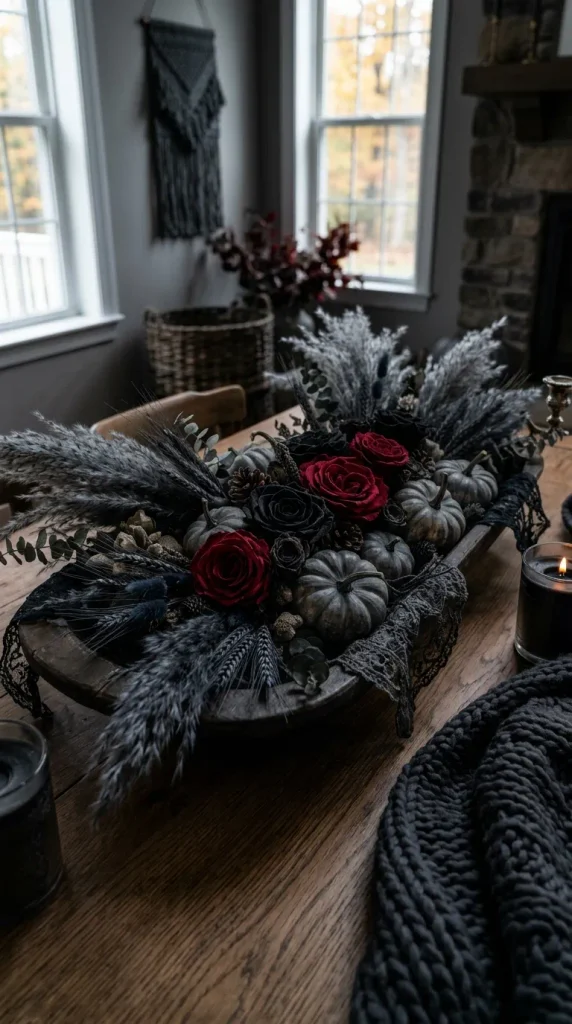
15. Moody Black Vase with Rust Anthurium and Protea For a striking, contemporary, and avant-garde aesthetic, this arrangement features structural tropical flowers rendered in rich autumnal colors, arranged cleanly inside a minimalist matte black vessel.
- Materials Needed: Matte black architectural vase, rust-colored anthurium blooms, deep burgundy king protea, black scabiosa, and dark green monstera leaves cut down to scale.
- Step-by-Step Instructions:
- Fill the matte black vase with fresh cool water and floral nutrient.
- Insert the trimmed dark green monstera leaves at the back of the vase to create a bold, architectural dark silhouette.
- Position the large burgundy king protea slightly off-center as the primary dramatic focal anchor of the arrangement.
- Tuck the glossy, heart-shaped rust anthurium blooms nearby, letting their unique waxy texture catch the light.
- Add delicate black scabiosa flowers around the base and sides to soften the bold tropical elements with wild garden movement.
- Tips and Variations: Use dried palm spears painted in a dark charcoal shade for an even more dramatic, high-fashion structural statement.
- Care Instructions: Anthuriums require clean water; change the vase water every 48 hours and wipe the stems down to maintain optimal health.
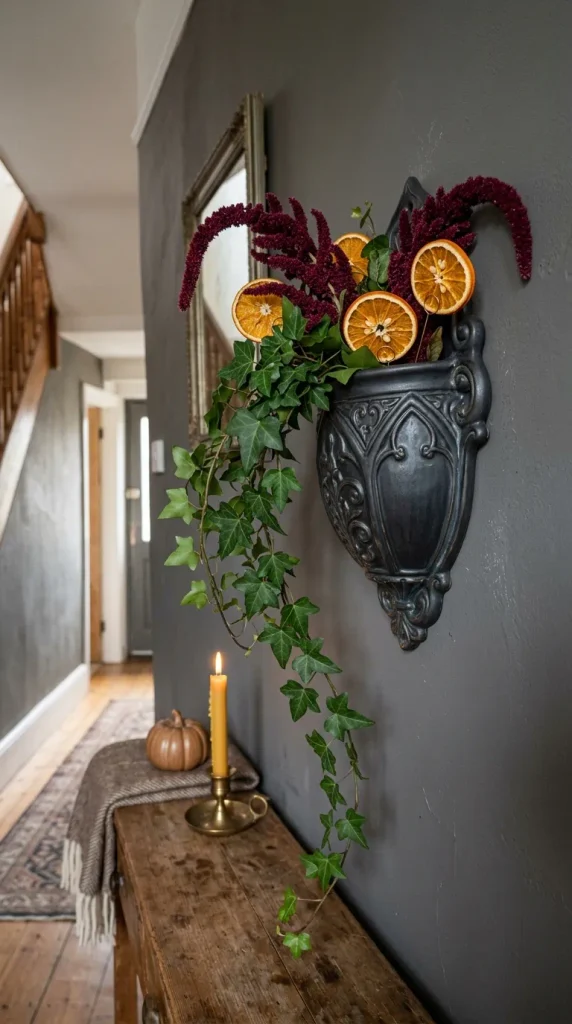
16. Hanging Botanical Wall Pocket Display Shifting away from tabletop surfaces, this unique arrangement utilizes a wall-mounted ceramic pocket to display a cascading waterfall of dried autumn botanicals, perfect for narrow hallways or compact apartments.
- Materials Needed: Wall-mounted ceramic pocket vessel, preserved trailing ivy, dried orange slices on wire picks, burgundy amaranthus, and preserved eucalyptus.
- Step-by-Step Instructions:
- Hang your ceramic pocket securely on a wall hook or nail at eye level.
- Insert a small block of dry floral foam inside the pocket to anchor the botanical stems securely at an upward angle.
- Arrange the preserved trailing ivy and burgundy amaranthus so they cascade gracefully downward over the front lip of the pocket.
- Tuck preserved eucalyptus leaves into the upper section to create a lush, rounded upper crown.
- Push the wired dried orange slice picks into the arrangement, letting their bright citrus rings add a pop of cheerful autumn color.
- Tips and Variations: Add small cinnamon sticks tied with twine to the arrangement for a multisensory autumn experience that smells as good as it looks.
- Care Instructions: Dust the hanging display gently every week with a soft-bristled artist paintbrush to keep the botanical elements looking pristine.
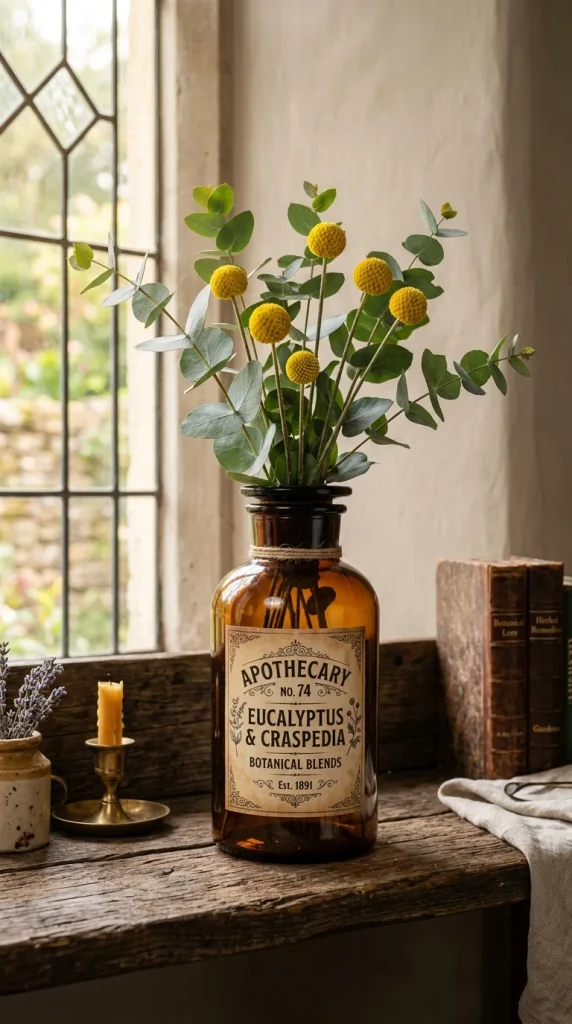
17. Warm Amber Jar with Eucalyptus and Craspedia Effortless, breezy, and effortlessly chic, this everyday arrangement pairs medicinal-style amber apothecary jars with simple clusters of aromatic eucalyptus and golden spheres.
- Materials Needed: Vintage amber apothecary glass bottle, fresh silver dollar eucalyptus, dried craspedia stems, and brown twine.
- Step-by-Step Instructions:
- Wash and dry the vintage amber apothecary bottle, filling it three-quarters full with fresh water.
- Strip the lower leaves from the silver dollar eucalyptus stems so no foliage sits below the waterline.
- Arrange the eucalyptus branches inside the narrow neck of the bottle, allowing them to fan out naturally in multiple directions.
- Insert several yellow craspedia stems directly through the center of the eucalyptus foliage so their bright heads peek out the top.
- Wrap a length of brown twine several times around the neck of the apothecary bottle, tying it into a neat bow for a rustic finishing touch.
- Tips and Variations: Group three apothecary bottles of varying heights together on a wooden tray, filling each with a single botanical variety for a cohesive vignette.
- Care Instructions: Eucalyptus drinks a significant amount of water; check the bottle level daily and top off as needed.
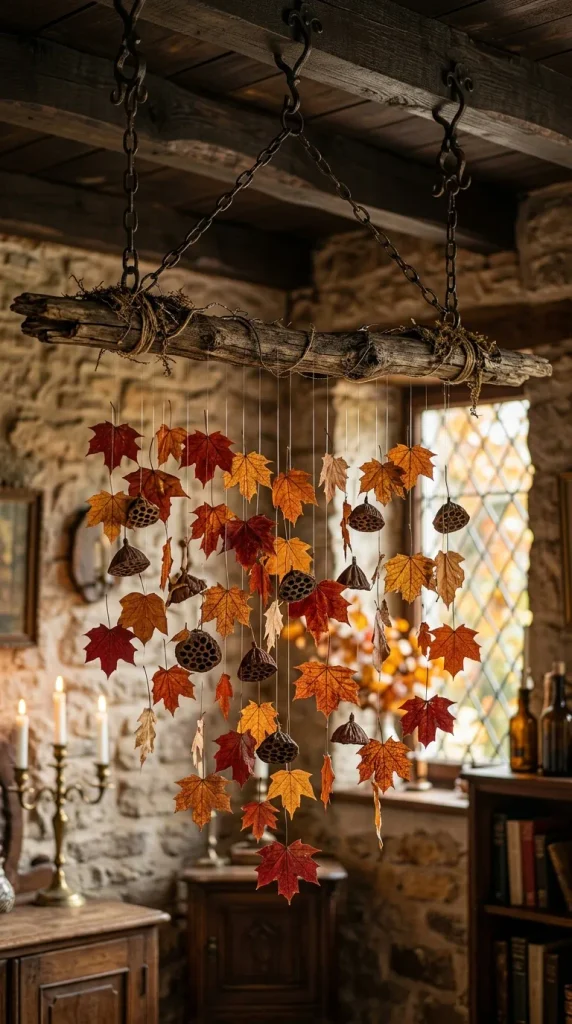
18. Dried Autumn Leaf Mobile and Hanging Branch Transforming traditional floristry into an immersive overhead art piece, this suspended branch arrangement features floating autumn leaves, dried seed pods, and delicate dangling botanical elements.
- Materials Needed: Sturdy horizontal tree branch (sanitized), clear monofilament fishing line, pressed autumn maple leaves, dried lotus pods, and small glass test tubes for fresh stems.
- Step-by-Step Instructions:
- Suspend the sanitized horizontal tree branch securely from the ceiling or a window frame using strong clear fishing line at your desired height.
- Tie varying lengths of fishing line to pressed autumn maple leaves and dried lotus pods, securing them with tiny dabs of clear craft glue.
- Tie the dangling botanical strands securely at staggered heights along the length of the suspended branch to create a floating autumn canopy.
- Hang small glass test tubes filled with water along the branch and insert fresh seasonal stems for pops of vibrant life.
- Adjust the hanging lengths until the mobile hangs balanced and catches natural window light effectively.
- Tips and Variations: Intertwine a warm white fairy light string along the main branch to create a magical glowing canopy for evening dinner parties.
- Care Instructions: Ensure the fishing line is securely knotted to prevent slips, and refresh the water in the test tubes every few days using a kitchen syringe.
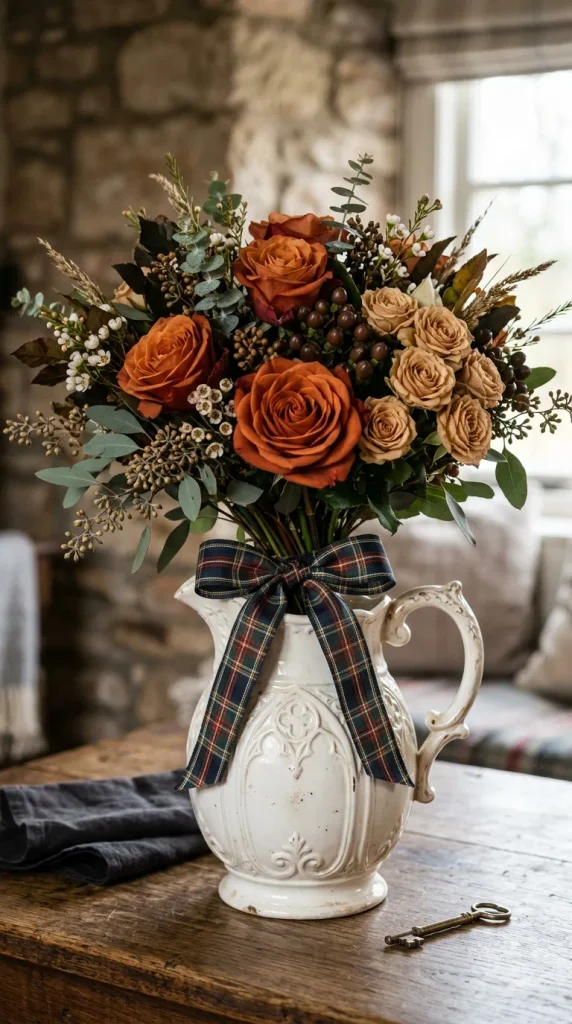
19. Cozy Tartan Plaid and Rust Rose Bouquet Merging classic autumn textiles with traditional floristry, this hand-tied bouquet is wrapped in rich tartan wool ribbon and housed in a classic white ceramic pitcher for a comforting, cottage-core aesthetic.
- Materials Needed: White ceramic pitcher, rust garden roses, tan spray roses, seeded eucalyptus, hypericum berries, and tartan plaid ribbon.
- Step-by-Step Instructions:
- Gather your fresh stems in your hand using a spiral technique, crossing the stems diagonally to create a sturdy, rounded bouquet shape.
- Place the rust garden roses and tan spray roses at the focal center, surrounded by layers of seeded eucalyptus and dark green foliage.
- Tuck clusters of burgundy hypericum berries throughout the arrangement to add glossy texture and depth.
- Secure the spiral stems tightly with floral tape, trim the ends evenly, and place the finished hand-tied bouquet inside the white ceramic pitcher filled with water.
- Tie a wide tartan plaid ribbon in a neat bow around the belly of the pitcher to complete the cozy aesthetic.
- Tips and Variations: Wrap the actual stems of the bouquet in burlap and twine before placing them in the pitcher if you prefer a rustic presentation style.
- Care Instructions: Remove any leaves that fall below the waterline in the pitcher immediately to prevent bacterial growth and extend vase life.
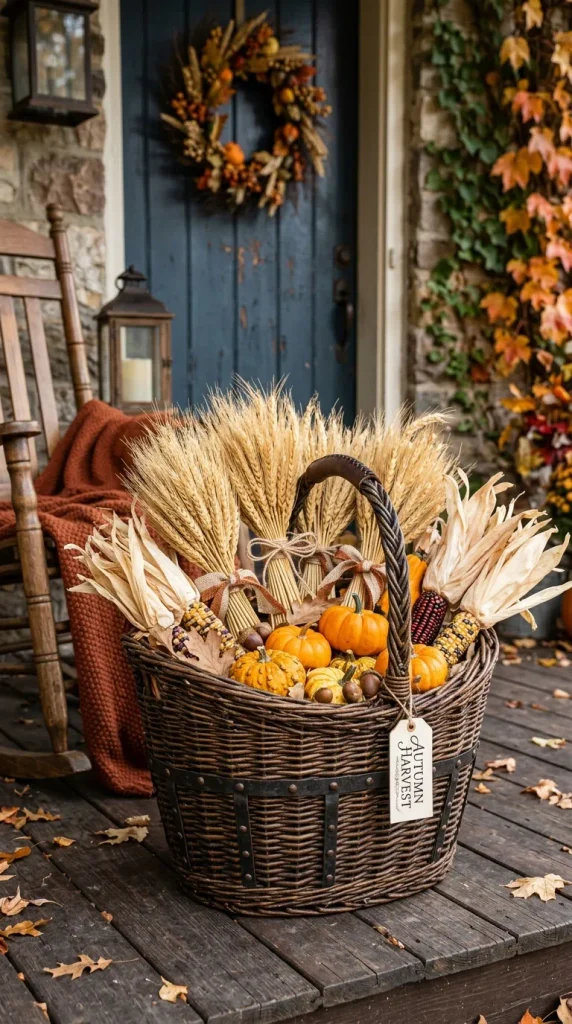
20. Golden Wheat and Pumpkin Harvest Basket A bountiful display that celebrates the peak of the autumn harvest, this arrangement uses a natural woven willow basket packed with golden wheat, dried corn husks, and vibrant orange pumpkins.
- Materials Needed: Deep woven willow harvest basket, plastic basket liner, dry floral foam, golden wheat bundles, dried corn husks, and small orange pumpkins.
- Step-by-Step Instructions:
- Line the interior of the woven willow basket with a waterproof plastic liner to protect the natural basket fibers from moisture.
- Wedge dry floral foam blocks securely inside the lined basket base.
- Insert dense bundles of golden wheat along the back edge of the basket to create a tall, textured harvest backdrop.
- Arrange dried corn husks cascading outward from the sides of the basket for rustic, sculptural movement.
- Nest multiple small orange pumpkins securely into the front of the basket, resting them among the wheat and husks for a bountiful finish.
- Tips and Variations: Tuck faux or dried bittersweet vines around the basket handle, letting them wind upward for an integrated, foraged look.
- Care Instructions: Keep the basket in a dry indoor environment away from direct moisture to protect the natural woven willow fibers from deteriorating.
More ideas to come in future addition