An aquascape is far more than a aquatic container; it serves as a living piece of fine art, a calming focal point, and an intentional design element that brings natural tranquility into your home. Modern fish tank designs seamlessly bridge the gap between biological ecosystem management and high-end interior architecture. Whether you are looking to elevate a minimalist apartment, construct a grand living room centerpieces, or create a quiet desktop sanctuary, thoughtful aquascaping transforms aquatic environments into captivating visual experiences.
Below are 20 elegant, aesthetic, and realistic fish tank ideas designed to inspire your next home aquascape.
1. The Minimalist Iwagumi Japanese Rock Garden Aquascape
Introduction
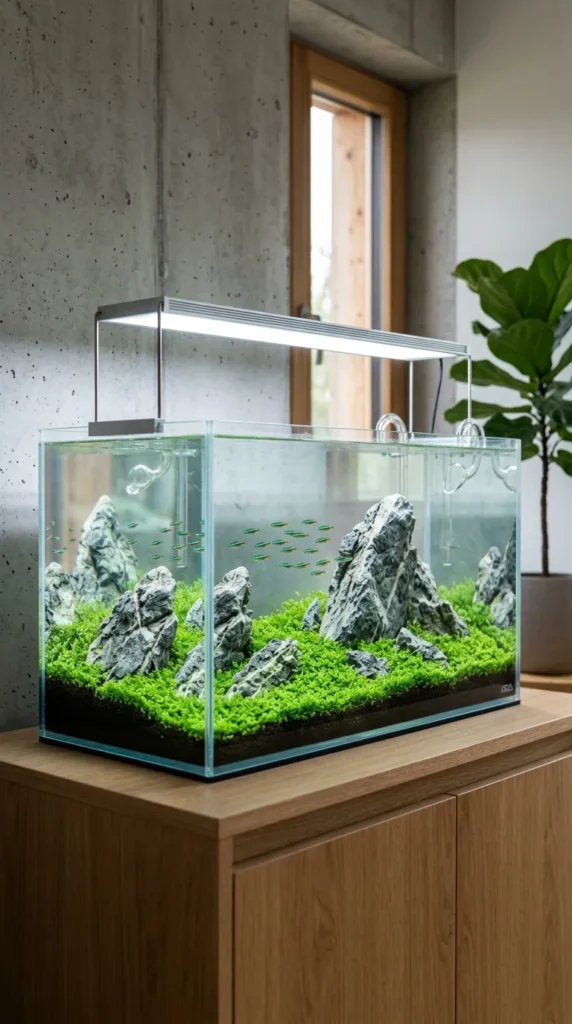
Rooted in Japanese Zen philosophy, the Iwagumi style relies on strict compositional rules using carefully placed stone formations and low-growing carpet plants. This design prioritizes open space, tranquility, and refined simplicity.
What This Idea Means
Iwagumi translates to “rock formation.” In this setup, the aquascape is built around an odd number of stones—traditionally three or five—where one primary stone (the Oyaishi) dominates the flow, balanced by smaller supporting stones (Fukusei and Soeishi).
How to Make It
- Choose an ultra-clear low-iron glass rimless aquarium to maximize visual purity.
- Select textured, natural stones such as Seiryu, Ryuoh, or Frodo stone with consistent veining and tone.
- Place the main stone according to the Golden Ratio (roughly two-thirds across the tank width) leaning slightly in the direction of water flow.
- Substrate the floor with fine dark aqua-soil and plant a uniform foreground carpet of Monte Carlo (Micranthemum tweediei) or Dwarf Hairgrass (Eleocharis parvula).
Tips & Variations
- Stocking: Keep livestock minimal and uniform. A single schooling species like Green Neon Tetras or Harlequin Rasboras maintains the peaceful visual balance.
- Maintenance: Iwagumi setups require consistent trimming of carpet plants and balanced lighting to prevent algae growth on exposed stone faces.