4. The Dutch Botanical Palette Aquascape
Introduction
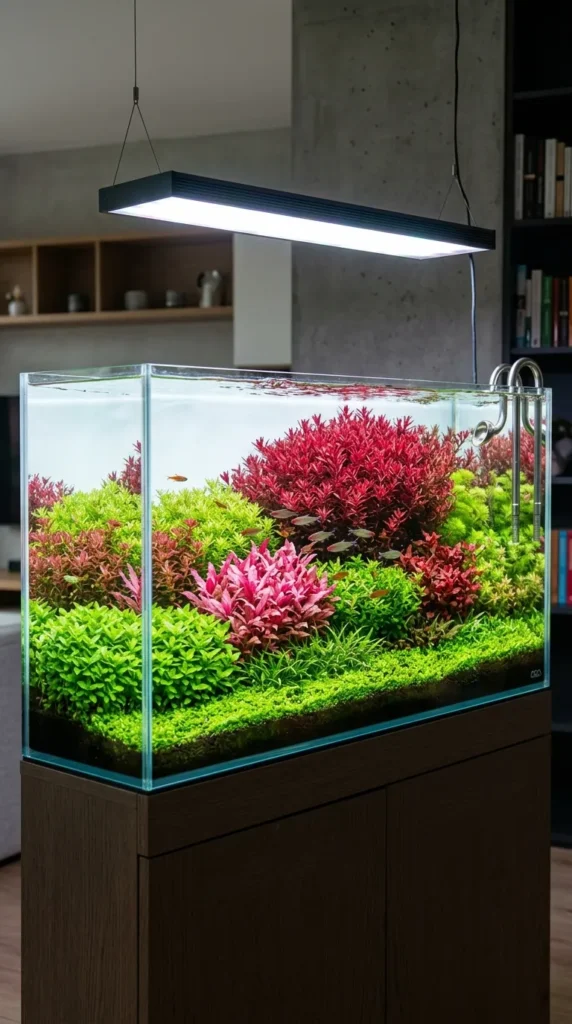
The Dutch style is the aquatic equivalent of an English flower garden. Relying entirely on vibrant, contrasting aquatic plants without visible stones or driftwood, it emphasizes color blocking, foliage textures, and meticulous pruning.
What This Idea Means
Originating in the 1930s, the Dutch aquascape uses plant height, leaf structure, and distinct color hues (greens, deep reds, pinks, and oranges) arranged in structured “streets” that run from front to back, creating incredible visual depth.
How to Make It
- Install a high-output RGB+W LED light system to trigger rich red and purple pigmentation in demanding plant species.
- Layout plants in defined rows or groups: use low foreground plants like Staurogyne repens, midground species like Alternanthera reineckii ‘Mini’, and background stems like Rotala macrandra or Ludwigia inclinata.
- Maintain clear contrast between adjacent plant groups—pair small round leaves with fine needle-like foliage, and bright red stems beside light lime-green plants.
- Inject pressurized CO2 and implement a strict daily liquid fertilizer routine.
Tips & Variations
- Trimming Technique: Regularly trim stem tops with curved aquascaping scissors to encourage dense, bushy side-shoots.
- Livestock: Add small algae-eaters like Amano Shrimp and Otocinclus catfish to keep leaves spotless without disrupting the delicate stems.