Terracotta pots are a staple of gardening and home decor, appreciated for their warm, earthy clay tone and classic silhouette. However, when you infuse the humble terracotta vessel with the dramatic grandeur, intricate geometry, and dark romanticism of Gothic art, it transforms into an extraordinary decorative piece. Gothic aesthetic terracotta pot painting blends moody color palettes—deep matte blacks, antique golds, oxblood reds, royal purples, and distressed ivory—with iconic motifs like pointed lancet arches, stained glass tracery, baroque filigree, skeletal flora, and celestial moons.
Whether you are looking to elevate your indoor houseplant collection, craft striking Pinterest-worthy decor for a dark academia library, or add dark fairytale charm to your garden, this comprehensive guide breaks down 20 unique Gothic-style painted terracotta pot ideas. Each concept includes a design introduction, artistic philosophy, step-by-step painting process, and expert styling tips.


1. The Matte Black & Antique Gold Lancet Arch Pot
Introduction
The Matte Black & Antique Gold Lancet Arch Pot captures the architectural drama of cathedral facades. Featuring crisp, pointed Gothic lancet arches painted in metallic antique gold against a velvety, flat matte black clay background, this pot creates a regal, high-contrast look suitable for dark academia interiors.
What This Idea Means
This concept leverages high-contrast value framing. Matte black absorbs light, making the reflective gold metallic paint pop off the terracotta surface like illuminated cathedral windows in the night sky.
How to Make It
- Clean and sand the terracotta pot surface thoroughly, then seal it inside and out with an acrylic sealer to prevent moisture from bubbling the paint.
- Paint the entire exterior with two smooth coats of charcoal or matte black acrylic craft paint.
- Using a flexible fine-line painter’s tape or a custom cardstock stencil, map out repeating pointed lancet arch shapes around the circumference of the pot.
- Fill inside the arch outlines with brilliant metallic antique gold or bronze acrylic paint using a synthetic detail brush.
- Apply a matte clear coat overall, then go back over the gold arches with a satin varnish to give the metallic sections a subtle shine.
Tips & Variations
- Gilded Rim: Paint the top rolled lip of the pot entirely in antique gold to frame the arch design cleanly.
- Distressed Gold: Lightly dab dark brown acrylic paint with a sea sponge over the dry gold arches to simulate aged, tarnished brass.
- Plant Pairing: Pair with dark foliage plants like Raven ZZ Plants, Black Prince Succulents, or Dark Velvet Alocasias.
2. The Crimson Damask & Obsidian Lace Pot
Introduction
Evoking royal Victorian parlor drapery, the Crimson Damask & Obsidian Lace Pot combines rich oxblood red undertones with intricate, hand-painted black damask patterns and delicate lace filigree trim.
What This Idea Means
Damask motifs represent elegance, wealth, and historical depth. When rendered in deep blood-red and obsidian black, it creates a romantic, moody “vampiric elegance” aesthetic ideal for gothic Victorian home decor.
How to Make It
- Prime the pot, then paint the entire surface in a rich, deep crimson red acrylic paint.
- Once dry, dry-brush a thin wash of dark mahogany or brown around the bottom base and top rim to create a subtle aged vignette gradient.
- Using a detailed damask stencil or flexible silicone stamp, apply matte black acrylic paint across the body of the pot in repeating vertical rows.
- Hand-paint fine lace borders along the upper lip of the pot using a 00-size liner brush and black paint.
- Seal with a satin or semi-gloss clear coat to give the crimson base a rich, velvety depth.
Tips & Variations
- Velveteen Texture: Mix a tiny drop of textile medium into your black paint for an ultra-smooth finish when applying detailed lace lines.
- Burgundy Shift: Use a metallic burgundy base paint instead of flat crimson for an iridescent shimmer under direct sunlight.
- Plant Pairing: Complements deep red Coleus, Polka Dot Plants, or Anthurium with dark red spathes.
3. The Weathered White Marble & Iron Gate Pot
Introduction
Recreating the haunting beauty of aged cemetery monuments, the Weathered White Marble & Iron Gate Pot features a distressed grey and white faux marble texture overlaid with bold black wrought-iron gate scrollwork.
What This Idea Means
This idea brings outdoor cemetery art and historical architectural ironwork indoors. It plays on the contrast between soft, organic marble veining and rigid, decorative iron motifs.
How to Make It
- Paint the pot with a off-white or light grey base coat.
- Create a faux-marble effect by dipping a crinkled plastic bag or natural sea sponge into medium grey paint, lightly dabbing across the surface. Use a feather or ultra-fine brush dipped in dark charcoal to draw delicate marble veins, blurring them with a damp sponge.
- Allow the marble base to dry completely, then seal with a matte spray coat.
- Paint intricate wrought-iron gate designs, including pointed gothic spikes and fleur-de-lis flourishes, using black paint around the body.
- Lightly sand random edges with fine sandpaper to give the painted ironwork an aged, weathered appearance.
Tips & Variations
- Rust Accents: Dab tiny flecks of burnt sienna or reddish-orange paint at the joints of the iron gate design to simulate authentic iron rust.
- Cracked Marble: Use a fine black pen or liner brush to draw thin hairline cracks running down the stone texture.
- Plant Pairing: Looks stunning with cascading String of Pearls, Silver Satin Pothos, or White Fusion Calatheas.
4. The Celestial Moon Phase & Starlight Filigree Pot
Introduction
The Celestial Moon Phase & Starlight Filigree Pot blends nocturnal gothic mysticism with elegant astronomical art. Set against a deep midnight blue or black background, it features glowing iridescent silver moon phases surrounded by delicate stellar filigree.
What This Idea Means
Moons and stars have long been central symbols in nocturnal gothic romance and celestial art. This concept turns a plant pot into a magical astronomical artifact.
How to Make It
- Paint the pot in a dark navy blue, midnight indigo, or rich black shade.
- Sponge a soft nebula-like gradient around the midsection using metallic purple, dark teal, and silver paint.
- Measure equal spacing around the pot body, then paint a central full moon flanked by waxing and waning crescent moons using metallic silver or pearlescent white paint.
- Use a fine-tip white paint pen or fine brush to draw delicate starbursts, constellation lines, and fine filigree vines connecting the moon phases.
- Coat with a glossy or glitter-infused clear spray seal to catch room lighting.
Tips & Variations
- Real Crystal Inlays: Glue small flat-backed moonstone or clear quartz crystal cabochons onto the center of the full moon motifs.
- Gold Foil Stars: Apply metallic gold or silver leaf foil to the moon shapes instead of paint for intense metallic reflectivity.
- Plant Pairing: Perfect for Moonshine Sansevieria, Night-blooming Jasmine, or Silver Dollar Vine.
5. The Rose Window Stained Glass Pot
Introduction
Inspired by the vibrant circular windows of medieval European cathedrals, the Rose Window Stained Glass Pot uses glossy jewel-toned paints bordered by thick, raised black lead lines to mimic authentic stained glass art.
What This Idea Means
Stained glass transforms light into vibrant color storytelling. Recreating this on a terracotta pot allows you to showcase bright, jewel-toned colors (ruby red, sapphire blue, emerald green, amethyst purple) while maintaining a dark gothic framework.
How to Make It
- Paint the entire terracotta pot with a smooth coat of dark charcoal or black acrylic.
- Sketch circular rose window geometries (petals, wheel spokes, arches) around the pot using a white watercolor pencil.
- Apply high-gloss jewel-toned acrylic or vitrail glass paints inside the window segments using vibrant shades like ruby, cobalt, and magenta.
- Once the colorful sections dry, go over the segment outlines using black liquid dimensional fabric paint or black puffy paint to create raised “lead lines” (cames).
- Apply a high-gloss varnish over the colorful segments while keeping the black base matte for textural contrast.
Tips & Variations
- Metallic Lead Lines: Substitute black dimensional paint with metallic silver or dark pewter dimensional paint for an antique leaded glass finish.
- Translucent Layering: Mix gloss gel medium into your acrylic colors to give the painted glass panels a translucent, glassy depth.
- Plant Pairing: Pairs beautifully with vibrant pink Tradescantia Zebrina, Fittonia (Nerve Plant), or Calathea Ornata.
6. The Nocturnal Flora & Botanical Skull Pot
Introduction
Blending dark botanical illustration with memento mori symbolism, the Nocturnal Flora & Botanical Skull Pot features detailed skeletal motifs interwoven with blooming nightshade, black roses, and trailing ivy.
What This Idea Means
This concept celebrates the Victorian memento mori aesthetic—a reminder of mortality balanced by the beauty of nature. It merges delicate botanical beauty with dark, romantic gothic imagery.
How to Make It
- Paint the pot in a warm bone-ivory, charcoal grey, or deep forest green background tone.
- Pencil in central anatomical skull outlines or animal skully silhouettes on the front and back of the pot.
- Paint the skull motifs in off-white, adding shading with diluted raw umber and grey paint washes.
- Paint dark flora wrapping around and growing through the skull motifs, including black roses, thorny vines, belladonna berries, and ferns using fine detail brushes.
- Seal the pot with a satin varnish to protect the detailed brushwork.
Tips & Variations
- Shading Wash: Brush a thin, watery wash of brown acrylic over the finished skull painting and immediately wipe it back with a paper towel to highlight bone cracks and age.
- Gold Leaf Teeth: Accent the teeth or eye sockets of the skull painting with gold leafing for a surreal, glamorous touch.
- Plant Pairing: Ideal for Cobra Ferns, Black Velvet Alocasias, or Dragon Tail Pothos.
7. The Victorian Gothic Cameo & Velvet Trim Pot
Introduction
The Victorian Gothic Cameo & Velvet Trim Pot features hand-painted oval cameo medallion portraits—such as dark silhouettes, Victorian maidens, or skeletal figures—set within ornate carved frame borders on a matte black background.
What This Idea Means
Cameo jewelry was a hallmark of 19th-century Victorian mourning fashion and personal adornment. Translating cameos onto terracotta creates a historic, personal, and dark aristocrat aesthetic.
How to Make It
- Paint the pot in a rich matte black or deep plum color.
- Paint a raised oval shape on the front face of the pot in soft pastel pink, sage green, or pale blue.
- Once dry, paint a crisp black or ivory silhouette figure (profile maiden, raven, or skull) inside the oval medallion.
- Border the oval cameo using gold dimensional paint or by gluing a lightweight resin frame piece painted in antique gold.
- Paint subtle lace or velvet ribbon drape lines connecting around the top lip of the pot.
Tips & Variations
- 3D Resin Cameos: Glue real lightweight craft resin cameos onto the pot surface before painting for true raised tactile relief.
- Pearlescent Background: Paint the inside background of the cameo with pearlescent white acrylic for a mother-of-pearl sheen.
- Plant Pairing: Looks stunning with Pink Princess Philodendrons, Calathea Roseopicta, or Maidenhair Ferns.


8. The Aged Cracked Mortar & Gargoyle Relief Pot
Introduction
Emulating crumbling ancient cathedral stone walls, the Aged Cracked Mortar & Gargoyle Relief Pot combines heavy textured crackle paste with stone-grey dry-brushing and stoic gargoyle motifs.
What This Idea Means
Gargoyles served as grotesque architectural guardians designed to ward off evil spirits and route rainwater away from stone cathedrals. This pot mimics authentic weathered stone carved by centuries of rain and wind.
How to Make It
- Apply a thick layer of crackle medium or texture paste unevenly across the raw terracotta pot surface.
- Paint over the dried texture coat with medium grey acrylic paint, letting natural cracks form as it cures.
- Apply dark charcoal and black washes into the cracks, wiping excess off surface highlights to accentuate stone depth.
- Paint or stencil winged gargoyle silhouettes perched on stone ledges along the main body.
- Dry-brush pale grey and white paint along edges to simulate rough, sun-bleached stone edges.
Tips & Variations
- Real Moss Growth: Apply a light green acrylic dry-brushing or real dried moss accents in the cracks for an authentic, damp garden look.
- Bas-Relief Stencils: Use thick modeling paste through a 3D gargoyle stencil before painting to create actual raised stone reliefs on the pot face.
- Plant Pairing: Complements Staghorn Ferns, English Ivy, or String of Frogs.
9. The Crying Obsidian & Mystical Runes Pot
Introduction
Drawing inspiration from dark fantasy lore and mystical protective wards, the Crying Obsidian & Mystical Runes Pot features pitch-black gloss paint broken by glowing purple resin-like tear veins and hand-painted elder runes.
What This Idea Means
This concept taps into magical fantasy aesthetics. The contrast of glossy deep black with vibrant glowing purple or magenta line work evokes ancient magic, shadow energy, and mystical protection.
How to Make It
- Paint the pot in high-gloss black acrylic or black spray lacquer.
- Using vibrant magenta, purple, and neon violet paints, paint irregular vertical “weeping” fissure veins running down from the top rim.
- Blend white highlights into the center of the purple veins to create an illuminated, glowing liquid effect.
- Paint ancient elder runes or alchemy symbols along the rim and base using metallic silver or bright purple paint.
- Coat with a glossy clear epoxy resin or thick varnish to give the entire pot a glass-like obsidian sheen.
Tips & Variations
- Glow-in-the-Dark Paint: Mix glow-in-the-dark purple pigment into the center vein paint so the pot glows softly in dark rooms under UV light.
- Gold Vein Swap: Replace purple veins with gold leafing to create a Japanese Kintsugi-inspired gothic repair aesthetic.
- Plant Pairing: Perfect for Purple Passion Plants (Gynura), Begonia Rex, or African Violets.
10. The Baroque Gold Leaf & Oxblood Scrollwork Pot
Introduction
Exuding opulent theatrical extravagance, the Baroque Gold Leaf & Oxblood Scrollwork Pot features sweeping, heavy acanthus leaf scrollwork hand-painted or leafed in genuine gold over a deep oxblood red or burgundy background.
What This Idea Means
Baroque design is defined by dramatic movement, rich ornamentation, and grand luxury. Pairing heavy golden scrollwork with dark oxblood red produces a museum-worthy aristocratic statement piece.
How to Make It
- Paint the terracotta pot in two coats of deep oxblood red or dark burgundy paint.
- Pencil swirling acanthus leaf curves, filigree flourishes, and baroque frame motifs across the surface.
- Apply gilding size (leaf adhesive) over the penciled scrollwork lines with a fine detail brush.
- Lay sheets of gold leaf foil over the tacky adhesive, brushing away excess flakes with a soft dry makeup brush.
- Seal the gilded scrollwork with a dedicated shellac or gilding sealer, followed by a dark antique glaze wash to settle into carved scroll shadows.
Tips & Variations
- Raised Scrollwork: Use dimensional piping gel or relief paste to raise the scrollwork lines before applying gold leaf for real 3D texture.
- Distressed Gold: Rub fine steel wool gently over sections of the gold leaf to let the red base peak through like antique gilded furniture.
- Plant Pairing: Complements Rubber Trees (Ficus Elastica ‘Burgundy’), Red Vein Nerve Plants, or Anthurium.
11. The Raven Feathers & Iron Chain Pot
Introduction
Celebrating Edgar Allan Poe’s iconic dark romanticism, the Raven Feathers & Iron Chain Pot incorporates moody black raven feather patterns layered beneath hand-painted hanging iron chains and padlock motifs.
What This Idea Means
Ravens symbolize wisdom, mystery, and gothic romance. This design pairs soft, organic feather textures with rigid, industrial chain link patterns for dark visual balance.
How to Make It
- Paint the pot base in a subtle gradient transitioning from dark slate grey at the bottom to matte black at the top.
- Paint overlapping raven feather patterns around the body using varying shades of black, dark navy blue, and iridescent purple.
- Dry-brush metallic blue-purple mica powder over feather tips to capture the natural sheen of raven plumage.
- Paint 3D-style iron chain links draping diagonally around the pot lip using metallic gunmetal grey paint, adding white highlights and black shadow lines.
- Seal with a satin finish coat to preserve the feather sheen.
Tips & Variations
- Feather Stencils: Use real dried feathers dipped lightly in paint as natural stamps across the background.
- 3D Chain Detail: Drape real lightweight black iron crafting chains around the top rim, securing them with strong jewelry glue instead of painting them.
- Plant Pairing: Pairs nicely with ZZ Plants, Dark-leafed Peperomia, or String of Needles.
12. The Poison Apple & Botanical Belladonna Pot
Introduction
Drawing from dark fairytale folklore, the Poison Apple & Botanical Belladonna Pot merges sweet apothecary aesthetics with deadly floral illustrations, featuring dripping poison motifs and vintage apothecary herb labels.
What This Idea Means
This idea plays on dark apothecary storytelling. It turns plant pots into vintage poison jars or herbology vessels from a dark fairytale witch’s cottage.
How to Make It
- Paint the pot base in an aged parchment cream or muted sage green color.
- Age the background using diluted brown tea staining or watered-down raw umber acrylic paint brushed on and wiped back with a cloth.
- Paint a central vintage apothecary label border on the front face, writing botanical Latin names like Atropa Belladonna or Solanum Nigrum in gothic calligraphy script.
- Surround the label with detailed illustrations of nightshade berries, thorny stems, and dripping poisonous apples using fine liner brushes.
- Seal with a yellowed or warm-toned matte antique varnish.
Tips & Variations
- Dripping Rim: Paint vibrant toxic neon-green or glossy black “drips” running down from the upper rim over the apothecary base.
- Distressed Label Edges: Singe or tear real paper labels before gluing them onto the pot using Mod Podge for authentic vintage decay.
- Plant Pairing: Complements Carnivorous Plants (Venus Flytraps, Pitcher Plants) or Devil’s Ivy.
13. The Gothic Lattice & Climbing Ivy Pot
Introduction
Mimicking Victorian estate garden trellises, the Gothic Lattice & Climbing Ivy Pot combines dark wooden diagonal diamond lattice patterns with hand-painted deep green and black ivy vines winding up pointed arches.
What This Idea Means
This concept brings outdoor garden architecture down to a micro scale. It creates visual depth by placing organic climbing flora over geometric architectural trellis lines.
How to Make It
- Paint the pot in a warm dark brown, charcoal grey, or muted terracotta background tone.
- Map out a crisp diagonal diamond lattice grid using thin painter’s tape or fine white watercolor pencil lines.
- Paint the lattice lines in a contrasting dark mahogany or black tone, adding subtle shadow drop-lines along one edge to create a 3D raised wood effect.
- Paint realistic climbing ivy vines winding up through the lattice using olive, emerald, and dark green acrylics with tiny white vine highlights.
- Apply a satin clear sealer over the completed design.
Tips & Variations
- Variegated Ivy: Paint white and pale yellow leaf edges on select ivy leaves to simulate variegated botanical species.
- Pointed Lattice Top: Shape the upper edge of the painted lattice into pointed gothic arch peaks along the top rim.
- Plant Pairing: Pairs perfectly with real climbing Hedera Helix (English Ivy), Creeping Fig, or String of Frogs.
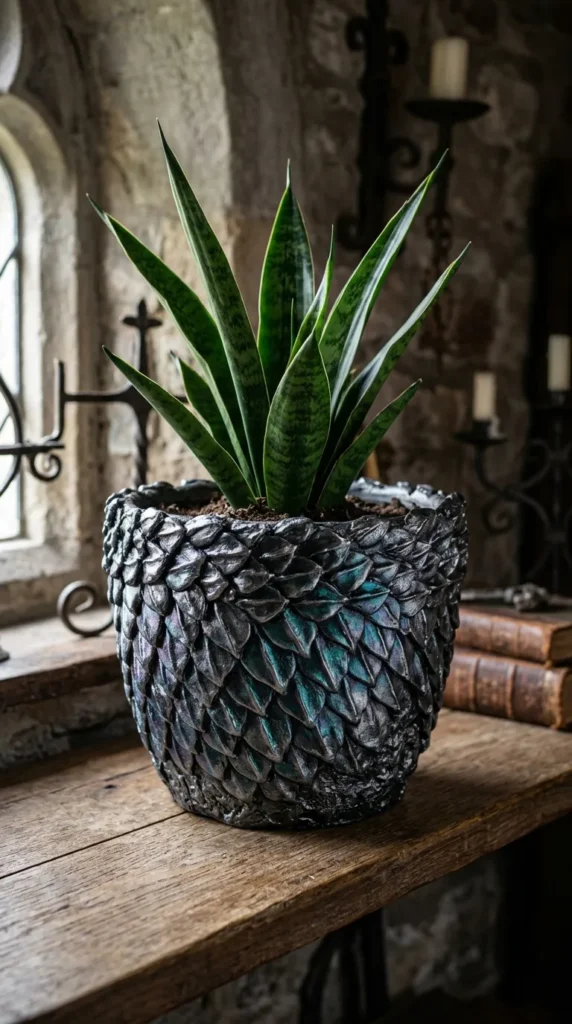
14. The Obsidian Dragon Scale & Flame Pot
Introduction
Channelling dark fantasy armor and dragon lore, the Obsidian Dragon Scale & Flame Pot features multi-layered, textured dragon scale patterns painted in metallic charcoal, gunmetal, and subtle iridescent purple.
What This Idea Means
Dragon scales provide dynamic geometric texture that catches room light across every curved tile edge. It imbues houseplant pots with an armor-plated, mythical protector aesthetic.
How to Make It
- Apply a base coat of solid matte black acrylic paint over the sealed pot.
- Using a scalloped stencil or fine detail brush, paint overlapping semi-circular dragon scales starting from the bottom base working upward.
- Shade each individual scale with a gradient: dark black at the top curve, shading into metallic gunmetal or dark silver at the rounded bottom edge.
- Highlight scale tips with iridescent purple, teal, or emerald chameleon shift paint.
- Coat with a ultra-gloss clear varnish to give the scales a wet, reptilian sheen.
Tips & Variations
- Raised 3D Scales: Cut lightweight foam or heavy cardstock scales and glue them in overlapping rows around the pot before painting for actual physical armor texture.
- Ember Base: Paint the bottom base in fiery orange and red gradients, letting dragon scales overlap the “burning embers.”
- Plant Pairing: Complements Snake Plants (Sansevieria), Dragon Tree (Dracaena Marginata), or Succulents.


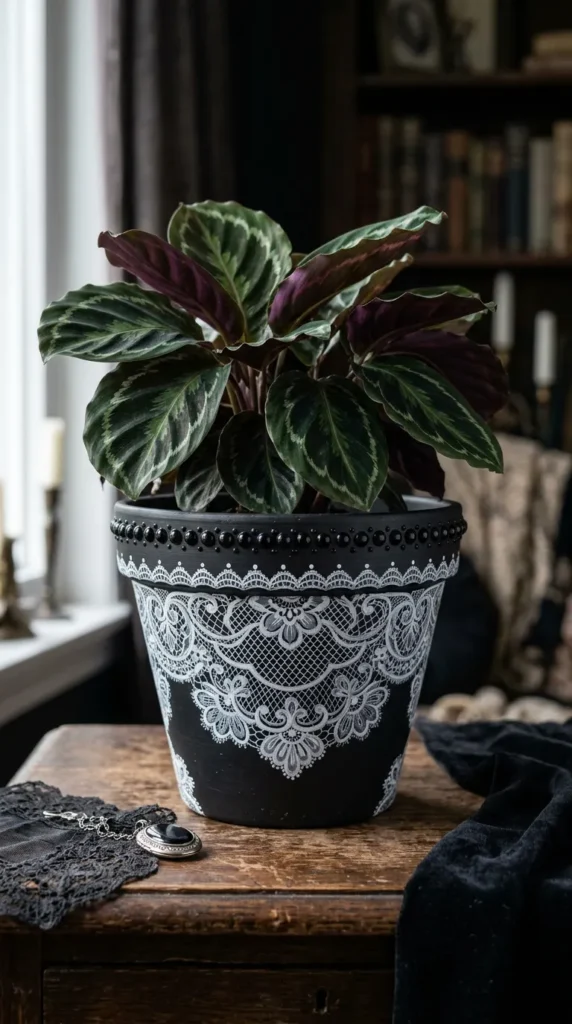
15. The Victorian Funeral Lace & Crepe Pot
Introduction
Inspired by 19th-century mourning etiquette and black funeral veil attire, the Victorian Funeral Lace & Crepe Pot incorporates intricate black lace trim, draped crepe fabric textures, and jet-black bead accents.
What This Idea Means
Victorian mourning fashion was defined by strict, elegant rituals involving rich black silk, lace, and jet jewelry. This design creates a solemn, highly refined, and romantic textile statement piece.
How to Make It
- Paint the entire pot in a deep, flat midnight black or charcoal grey matte paint.
- Use real black lace fabric as a stencil: wrap lace tightly around the pot, spray with white or pale grey paint, then remove to reveal crisp, detailed lace silhouettes.
- Alternatively, hand-paint cascading lace fans and netted mesh textures using a fine 00 detail brush and light grey paint over the black background.
- Paint realistic fabric folds and ribbon drapes along the upper neck of the pot using subtle black-to-grey gradient shading.
- Add dots of high-gloss black dimensional paint along lace borders to simulate jet bead embroidery.
Tips & Variations
- Real Lace Trim: Glue actual vintage black lace trim around the top rolled lip of the pot for soft tactile contrast.
- Matte & Gloss Contrast: Keep the background fabric completely matte while painting lace patterns in high-gloss black paint.
- Plant Pairing: Looks stunning with Black Coral Sansevieria, Dark Lord Philodendron, or Velvet Calathea.
16. The Gothic Cathedral Spire Silhouette Pot
Introduction
The Gothic Cathedral Spire Silhouette Pot showcases a dramatic, high-contrast skyline silhouette of sharp pointed cathedral spires, flying buttresses, and clock towers set against a moody sunset or twilight gradient sky.
What This Idea Means
This idea transforms the terracotta pot into a panoramic canvas. It leverages dramatic sky gradients (crimson, violet, deep orange) to make sharp black architectural silhouettes stand out sharply.
How to Make It
- Paint a horizontal sunset or twilight gradient around the midsection of the pot, blending colors from deep crimson red at the base up through magenta, violet, and deep navy at the top.
- Allow the background sky gradient to dry completely.
- Trace or freehand a detailed city line of gothic cathedral spires, pointed roofs, gargoyles, and flying buttresses along the bottom half of the pot using black acrylic paint.
- Fill in the cathedral silhouettes completely with flat matte black paint.
- Paint a glowing yellow full moon or tiny white stars in the upper sky portion for atmospheric nighttime depth.
Tips & Variations
- Sponge Blending: Use a damp makeup sponge to blend sky gradient transitions smoothly without brush stroke lines.
- Silver Sky Variant: Replace color gradients with a metallic silver-and-grey monochromatic sky for a stormy, dramatic aesthetic.
- Plant Pairing: Pairs beautifully with Norfolk Island Pine, Parlor Palms, or Tall Cast Iron Plants.
17. The Dark Academia Book Spine & Scroll Pot
Introduction
Appealing to dark academia literature enthusiasts, the Dark Academia Book Spine & Scroll Pot paints the body of the pot to resemble antique leather-bound book spines stacked vertically around the pot circumference, accented with gold leaf lettering.
What This Idea Means
This design celebrates classical literature, ancient libraries, and historical scholarship. It integrates bookish academia charm directly into botanical houseplant styling.
How to Make It
- Divide the pot circumference into equal vertical rectangular segments representing book spines.
- Paint each spine section in rich antique tones: deep brown, forest green, oxblood red, navy blue, and dark plum.
- Apply dark wax or a watery raw umber paint wash across all spines to simulate aged, worn leather texture.
- Paint raised leather ribs across top and bottom spine sections using thin strips of cardboard or heavy acrylic paint lines.
- Hand-letter classic gothic titles (Frankenstein, Dracula, The Raven) or Latin phrases along the spines using metallic gold paint pens.
Tips & Variations
- Faux Page Top: Paint the top rolled lip of the pot in off-white with fine brown horizontal lines to look like antique book pages viewed from above.
- Bookmark Ribbons: Paint thin crimson satin bookmark ribbons dangling down from between the book spines.
- Plant Pairing: Perfect for Prayer Plants (Maranta), Peperomia, or Nerve Plants placed on bookshelf ledges.
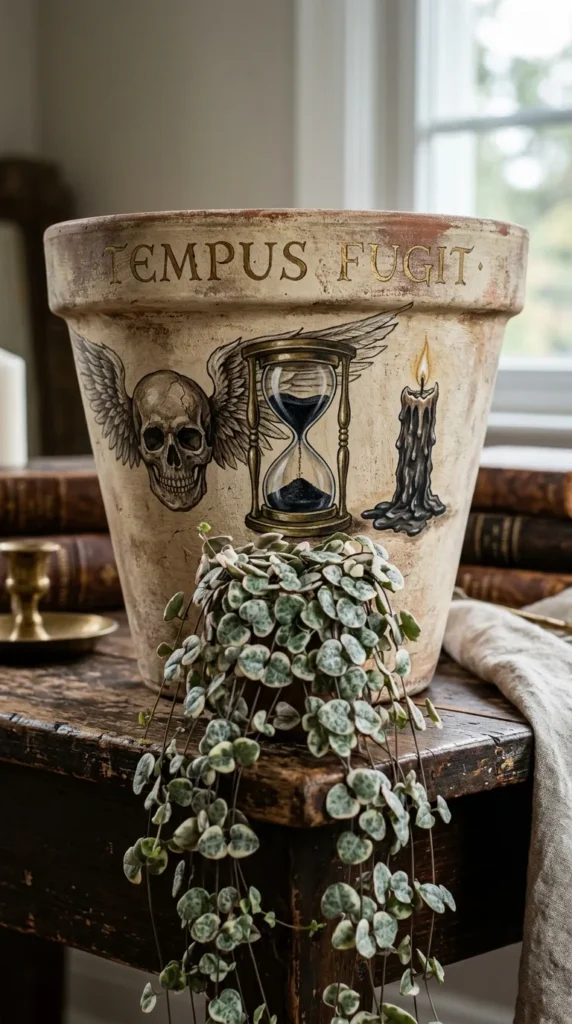
18. The Memento Mori Hourglass & Skull Pot
Introduction
Centering on classic philosophical themes of time and mortality, the Memento Mori Hourglass & Skull Pot features detailed paintings of wooden hourglasses with black sand, winged skulls, and fading candles.
What This Idea Means
Memento Mori art reminds viewers of the precious nature of time. Translating this classic philosophical art genre onto plant pots pairs themes of mortality directly with living, growing flora.
How to Make It
- Paint the pot in a smooth dark slate grey or warm bone-brown background.
- Sketch a central brass or dark wood hourglass on the front face, with a winged skull or raven perched on top.
- Paint the hourglass frame using metallic bronze or antique gold paint, filling the glass bulbs with black and white sand textures.
- Paint a melting wax candle alongside the hourglass, adding a flickering orange flame and wisps of grey smoke drifting around the rim.
- Hand-paint Latin mottos like Tempus Fugit (Time Flies) or Memento Mori in gothic calligraphy along the top rim band.
Tips & Variations
- Real Sand Accent: Glue real fine black sand inside the lower bulb section of the painted hourglass for authentic tactile depth.
- Withered Rose Detail: Paint a falling, withered red rose petal dropping alongside the hourglass frame.
- Plant Pairing: Complements String of Hearts, String of Turtles, or Tillandsia Air Plants.
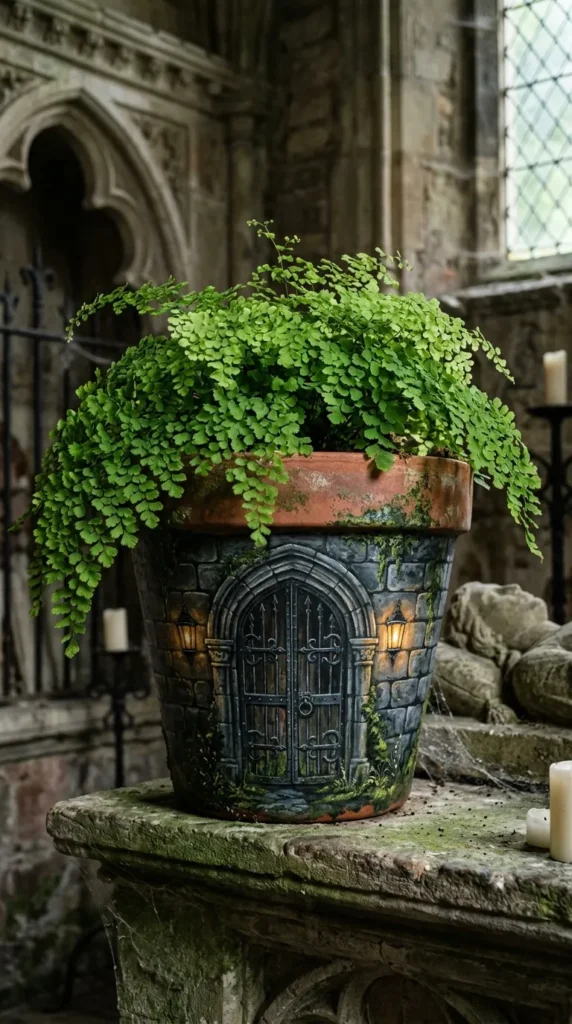
19. The Enchanted Crypt & Wrought Iron Fence Pot
Introduction
Recreating the entrance to an overgrown gothic mausoleum, the Enchanted Crypt & Wrought Iron Fence Pot features hand-painted stone block masonry, heavy iron gate doors, and glowing lanterns.
What This Idea Means
This concept brings historic cemetery architecture down to micro plant scale. It creates storytelling depth, making the plant growing out of the pot look like overgrown flora breaking through an ancient crypt roof.
How to Make It
- Paint the body of the pot with a light grey stone block pattern, using darker grey paint lines to define individual masonry blocks.
- Sponge dark grey and moss green washes over the blocks to age the stone walls.
- Paint double-door wrought iron crypt gates in the center using black paint, detailed with pointed spikes and padlocks.
- Paint glowing yellow or blue lanterns hanging from iron brackets on either side of the crypt door.
- Paint climbing green moss and dark vines creeping up around the base and gate posts.
Tips & Variations
- 3D Metal Lock: Glue a tiny vintage brass key or miniature padlock onto the crypt gate painting for a fun 3D interactive element.
- Crypt Inscription: Paint a custom family crest or gothic inscription (Rest in Peace, Ad Astra) over the crypt arch.
- Plant Pairing: Looks magnificent with Ferns, Moss, or Miniature Ivy.
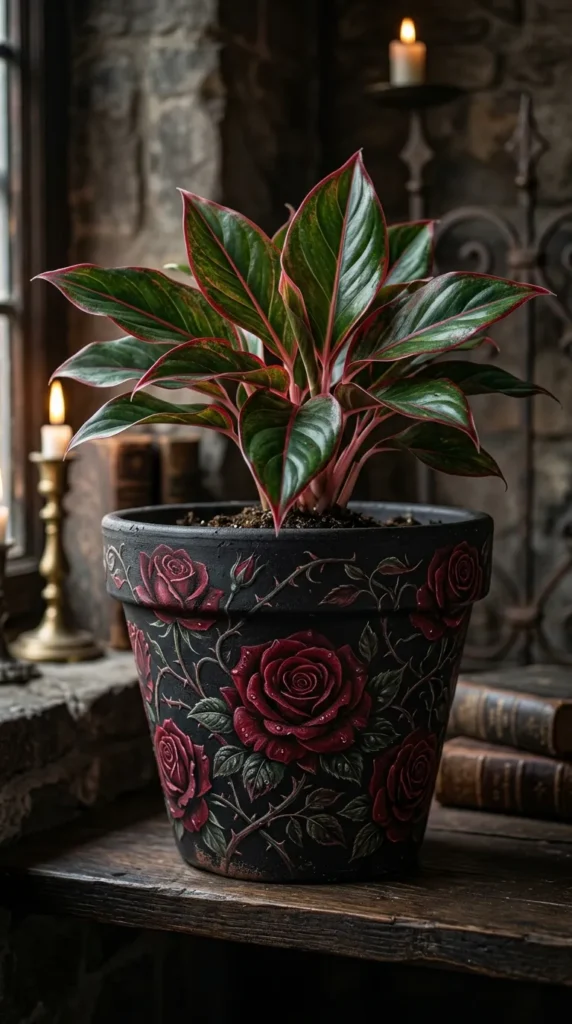
20. The Velvet Rose & Thorny Vine Pot
Introduction
Focusing on dramatic floral romance, the Velvet Rose & Thorny Vine Pot showcases oversized, deep crimson and black velvet roses tangled in intricate, spiky thorny vines wrapped around a matte charcoal pot.
What This Idea Means
The rose is the ultimate symbol of gothic romance—combining delicate velvet beauty with painful, protective thorns. This design wraps houseplant pots in timeless dark floral elegance.
How to Make It
- Paint the pot in a smooth matte charcoal or black base coat.
- Paint large, multi-petaled rose heads around the midsection using deep crimson, burgundy, and pure black acrylics.
- Layer rose petals using soft dry-brushing: dark blackish-red in shadow recesses, shading up to vibrant crimson on petal edges for 3D depth.
- Paint thick, dark green and black thorny vines twisting diagonally around the pot, connecting the rose blooms.
- Highlight sharp vine thorns with fine white highlights and paint tiny drops of red dew dripping from select thorns.
Tips & Variations
- Iridescent Petal Shimmer: Dust subtle red mica powder over the rose petal edges while paint is tacky to give the blooms a velvety shimmer.
- Black Rose Variant: Paint the roses entirely in jet black with dark silver highlights for a rare, moody botanical aesthetic.
- Plant Pairing: Pairs perfectly with Red Aglaonema, Rosary Vine, or Miniature Rose Bushes.


