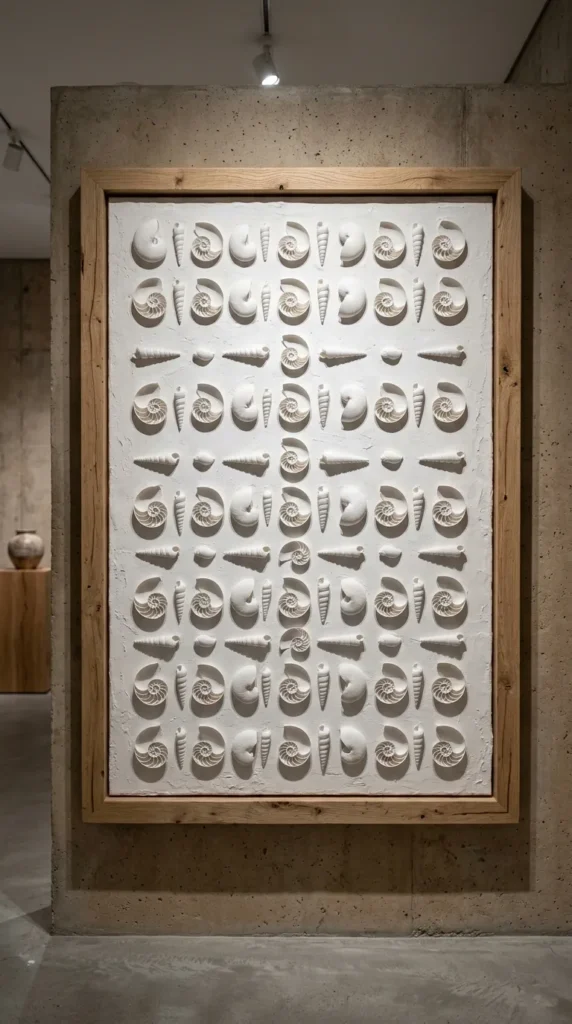
5. Architectural Plaster and Seashell Bas-Relief Art
Modern gallery art favors minimalist texture, and bas-relief shell art turns natural specimens into a modern plaster panel.
- What This Idea Means: A monochromatic wall panel where symmetrical or geometric shell placements emerge organically from a bed of sculptural wall plaster.
- Materials Needed: Stretched raw linen canvas or cradled birch wood panel (16×20 inches), gypsum plaster or lightweight joint compound, notched trowel, palette knife, uniform white nautilus slices, auger shells, or flat scallop shells, and ultra-matte chalk white paint.
- How to Make It:
- Prime the wood panel or raw linen canvas with a clear gesso foundation to prevent warping.
- Spread a generous 1/2-inch layer of structural gypsum plaster evenly across the canvas using a palette knife or notched trowel.
- While the plaster remains wet and workable, press selected shells into the compound in clean, geometric patterns (such as linear grids, concentric circles, or cascading arches).
- Smooth the displaced plaster around the shell perimeters using a damp watercolor brush to integrate the shells seamlessly into the surface.
- Let the composition cure undisturbed for 48 hours. Spray with two light coats of ultra-matte white chalk paint to unify the light refraction across the canvas.
- Tips and Variations: Leave the shells unpainted against a charcoal or raw linen plaster backdrop to highlight the natural contrast between the mediums.