3. Greco-Roman Bust Planters and Statuary
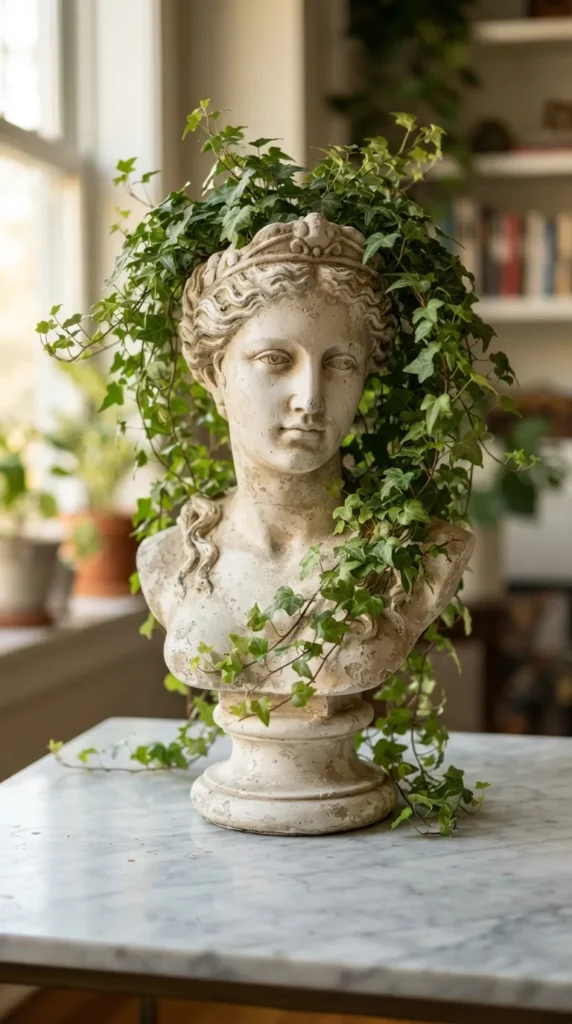
Sculpted busts representing ancient gods, philosophers, and mythic figures form a bedrock of Hellenistic artistic heritage. Repurposing weathered stone or plaster busts as planters or statement accents blends classical fine art with organic indoor foliage.
What This Idea Means
This idea merges high art with natural vitality. Nestling vibrant green plants or dried botanicals within classic stone head sculptures creates a striking visual contrast between ancient stone motifs and fresh organic life.
How to Make It
- Select or Modify a Bust: Purchase a hollow concrete, resin, or plaster Greco-Roman head bust. If using a solid plaster bust, carefully hollow out the top crown using a masonry drill bit and chisel.
- Waterproof the Interior: Coat the interior hollow with liquid rubber sealant or install a removable plastic pot liner to prevent water from seeping through the porous plaster or stone.
- Weather the Exterior: Give bright white resin or plaster busts an authentic aged patina by brushing on diluted dark brown and slate grey acrylic washes, wiping away excess from raised nose and brow contours with a damp rag.
- Plant Selection: Pot trailing plants like String of Pearls, Maidenhair Fern, or English Ivy inside the crown, allowing the greenery to drape down like textured, living hair.
Tips and Variations
- Materials Needed: Hollow classical bust sculpture, masonry drill (if needed), interior waterproof sealant, acrylic antiquing washes, potted trailing plants.
- Placement Tip: Set the bust atop a stacked pile of antique linen books on a mantel or nestled on a marble coffee table.
- Variation: Fill the crown with dried lavender or dried olive branches instead of live plants for a zero-maintenance classical centerpiece.